
Concrete Repair Services in Austin, TX
Concrete repair in Austin, TX covers cracked, sunken, spalled, and heaving driveways, patios, slabs, and sidewalks. We inspect first, find the cause, then tell you if a crack fill, a section replacement, or a tear-out is the right call.


Request Free Quote

The most useful thing we do on a repair call happens before any concrete is mixed: we figure out why it failed. A crack from a slab shrinking as it cured is cosmetic. A crack from clay heaving under one corner is going to keep opening no matter what’s poured into it. Those two look alike from the porch and need completely different answers. If you’ve got concrete that’s cracked, sunk, or flaking, contact us and we’ll come look before anyone quotes a fix.
This page covers crack and joint repair, sunken and settled slabs, spalling and surface damage, and section replacement on driveways, patios, slabs, sidewalks, and steps. It doesn’t cover house foundations. And if the honest answer is that the driveway is done, we’ll say so and point you to driveway replacement rather than sell you a repair that won’t hold.
Repair or replace: how we decide
We look at three things: is the slab moving, how much of it is affected, and what’s under it. A slab that’s stable with a few cracks is a repair. A slab that’s tilted, has cracks across a third or more of its panels, or was poured on bare dirt is usually a replacement, because every repair is fighting the same soil that broke it. We’ll show you what we’re seeing and put the recommendation in writing, and it’s your call from there.
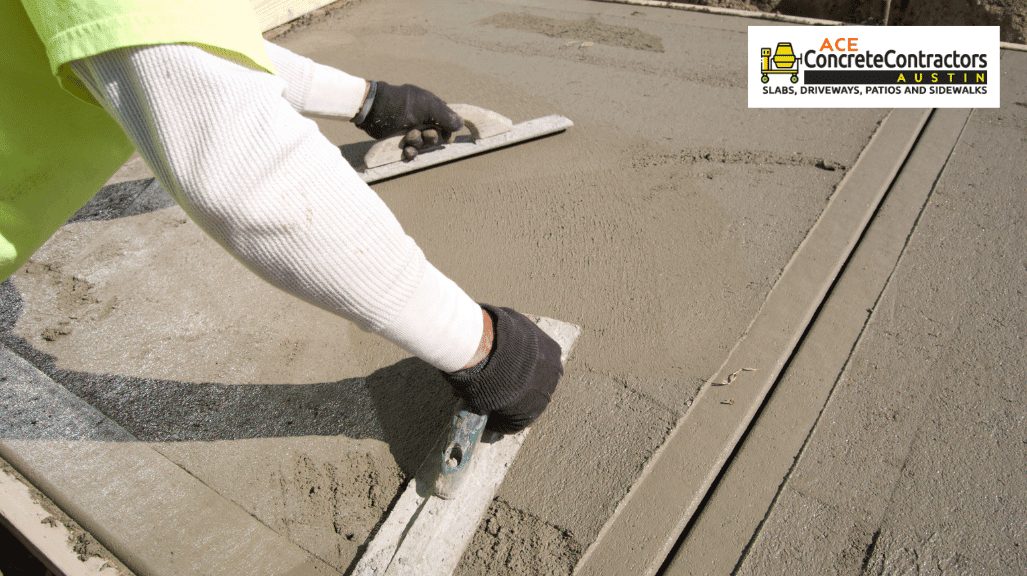
Crack repair and joint repair
Hairline shrinkage cracks get cleaned and sealed to keep water out, which is what turns a small crack into a big one on clay. Wider structural cracks get routed, filled with a flexible or epoxy product depending on whether the crack is still moving, and sealed. Control joints that have lost their filler get cleaned and refilled, because an open joint lets water straight down to the base. On driveways, the crack along the garage line is usually a missing control joint rather than a soil problem, and the fix is a saw cut and filled joint, not an overhaul. Our concrete crack repair guide covers what a homeowner can safely handle before calling us.
Sunken and settled concrete
When a panel sinks, the base under it has failed, and our fix rebuilds it: we cut out the affected section, excavate and recompact the base, set steel, and pour the section back, doweled to the surrounding slab so the pieces move together. We don’t offer slab-jacking or foam lifting; where settlement is minor and stable, we’ll say honestly that living with it beats paying for it, and where it’s active, a lifted slab over a failing base is a postponed repair, not a finished one. A sunken patio slab slab against the house is the urgent version, because it sends water at the foundation.
Surface damage and resurfacing
Spalling, pitting, and flaking mean the surface has failed but the slab underneath may be fine. Small areas get patched; when the wear covers most of a slab, the answer is a bonded overlay, which our concrete resurfacing service page covers step by step. It won’t fix a slab that’s moving, which is why we check for settlement first. Steps and stoops get the same treatment, and a chipped nosing is a quick fix if the step is otherwise solid. For heavy surface wear on a concrete sidewalk, grinding the trip hazard is often all the city or an HOA requires.
Why homeowners hire us for repair work
We’ve repaired and replaced concrete across Central Texas since 2012, and we’re fully insured. Repair is where a contractor’s honesty shows, because the easiest sale is the fix that won’t last. We’d rather tell you a slab is beyond saving than take the repair job and see you again in a year.
Every repair comes with a written scope that names the cause we found and the method, and we reply to every message the same business day. What we won’t do is fill a crack on a slab that’s still moving and call it fixed, and we’ll explain why. Our reviews and the story of the company are on About us.
Where we repair concrete around Austin
We handle repair calls across Austin and the suburbs, and the east side keeps us busiest. In East Austin homes, older homes often have patios and driveways poured thin and without steel, and the usual fix there is a section replacement along the house rather than crack fill, because a slab that’s pulled away from the house has already answered the repair question. Out in the suburbs, Round Rock driveways and Pflugerville driveways are mostly builder-grade slabs from the 1990s and 2000s with tilted panels along the garage line.
North and west, in Cedar Park and on Lakeway lots, rock under the slab means less settlement but more shrinkage cracking from fast cures in the sun, and the repairs are more often cosmetic. Inside Austin the sidewalk calls come from HOAs and the city’s sidewalk program, and the city’s trip-hazard thresholds decide which offsets can be ground flush and which mean a panel replacement. Summer heat affects repair too: overlays and crack fillers have working times that shrink in July, so we schedule those early in the day.
Concrete repair questions we hear most
Can a cracked concrete driveway be repaired instead of replaced?
Usually, if the slab isn’t moving. Shrinkage cracks and a missing control joint are repairs. Panels that have tilted, a driveway with cracks across most of its panels, or a slab poured on dirt with no base are replacement territory, because a repair is fighting the same soil that broke it. We’ll tell you which one you have after we look.
How do you fix sunken concrete?
We rebuild it rather than lift it: the sunken section is cut out, the base underneath is excavated and compacted properly, steel goes in, and the section is poured back and doweled to its neighbors. We don’t offer mudjacking or foam lifting; a lift over a failed base postpones the problem, and the rebuild ends it.
Why does concrete crack so much in Austin?
Expansive clay. It swells when it rains and shrinks in drought, and a slab poured on it without a compacted base, steel, and control joints cracks when the ground moves. Fast cures in summer heat add shrinkage cracks on top. Tree roots and water pooling along an edge finish the job. Our concrete cleaning guide covers keeping repaired concrete looking right.
Who handles concrete repair austin homeowners can trust to say when a fix won't work?
We try to be that contractor. Look for someone who inspects before quoting, names the cause in writing, and is willing to recommend replacement when repair won’t hold. A crack fill sold as permanent on a moving slab isn’t worth the invoice, and a contractor who sells one is telling you something about the rest of their advice.
How long does concrete repair take?
Crack and joint repair is usually a half day, with the filler cured by the next morning. Section replacements take two to three days including cure time before you can use the area. Resurfacing is a day plus a day of cure. We’ll give you the schedule in writing with the quote, and we’ll tell you honestly when a job is bigger than a repair.
Do you repair foundations?
No. Foundation repair is a separate trade with engineering behind it, and we don’t pretend otherwise. We repair the flatwork that sits around the house: driveways, patios, slabs, sidewalks, and steps. If your problem is the house slab itself, we’ll tell you so and describe the kind of firm to call, but we won’t quote it.
Is it worth resurfacing an old concrete patio?
If the slab is stable and the problem is pitting, stains, or flaking, yes: a bonded overlay gives you a new surface and finish for a fraction of a tear-out. If the patio has sunk or cracked through, resurfacing just hides the problem for a season. We check for movement first and won’t resurface a slab that’s still settling.
Call (512) 566-7530 or send the form below with a photo and we’ll tell you what we think, then come out and confirm it. If the honest answer is leave it alone, you’ll hear that too.