
How to Clean Concrete the Gentle-First Way
Cleaning concrete works up a ladder: sweep and rinse, then detergent and a stiff brush, then targeted treatments, with the pressure washer as a tool of last resort used at safe distance. Patios, driveways, and interior floors each bend the method slightly, and etched damage isn’t cleanable.
Concrete’s reputation for toughness gets surfaces ruined, because tough against trucks isn’t tough against a pressure washer held like a chisel. Most cleaning damage we see is enthusiasm: etched wand lines, blasted-open surfaces that now stain faster than before, stripped sealer in zebra stripes. So this guide is a ladder, gentlest first, and most jobs never need the top rungs. It covers the general method, then the patio and interior-floor variations it absorbs, and it hands off where cleaning stops working: stains that became damage belong to our damage handoff, and the two stubborn stain families get their own guides in rust playbook and paint playbook.

The ladder: four rungs, in order
Rung one: sweep and hose. It sounds insulting, and it solves a third of the cases we’re asked about, since most gray film is just dust, pollen, and the fine grit Austin’s air donates all year. Rung two: household detergent, warm water, a stiff nylon brush, and honest patience, which handles general grime, mildew shadows, and food stains, and it’s the rung most driveways never need to climb past. Rung three: targeted treatments, degreaser poultices for oil, oxygenated cleaners for organic staining under trees, applied to the stain instead of the whole slab, because slab-wide chemistry is how one stain becomes one mottled surface. Rung four, the pressure washer, and only after the first three earned it: wide fan tip, consistent distance, moving passes, never a point-blank needle, and never on a surface you haven’t tested in a corner first.
Patios: the shaded-slab problems
Patios collect the organic stains: mildew in the shaded corners, tannin drops under live oaks every spring, leaf shadows printed over a wet week. The oxygenated-cleaner rung handles all three, and a stiff brush beats pressure on textured finishes, since broom and salt textures hold grime in their grooves and hold wand damage the same way. Sealed and stamped patios clean gentler still, because the sealer is the surface and stripping it in patches is how patios end up mottled; those get detergent washes and resealing on schedule, the pairing our reseal pairing guide argues for by finish.
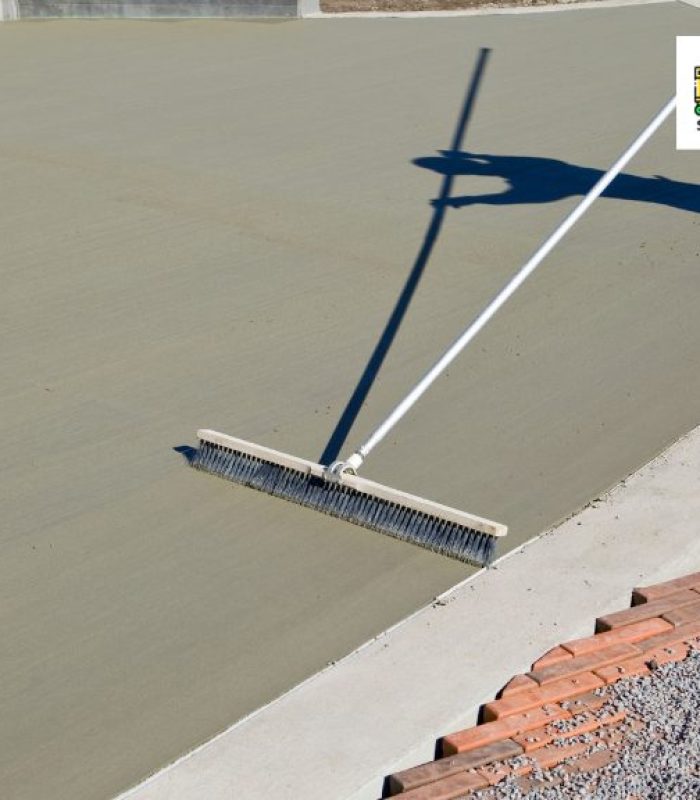
Interior floors: dust, not water
Garage and workshop floors flip the method entirely, since flooding an enclosed slab just trades a dirt problem for a drying problem that lasts longer. Dry methods lead: dust mop, vacuum, then damp mopping with a neutral cleaner, never acidic products that quietly etch. Oil drips get the degreaser-poultice treatment where they land. Smooth troweled floors show every cleaning shortcut, which is an argument for walk-off mats and drip pans doing the boring preventive work. A floor headed for epoxy someday needs cleaning plus the moisture patience covered in our coatable clearance guide, because clean and coatable are different clearances.
What cleaning can't fix, and how to need less of it
Etching, wand scars, spalling, and stains that outlasted rung three aren’t dirt anymore; they’re surface damage, and the honest fixes are grinding or resurfacing, not stronger chemicals. Rust and paint sit at that boundary and get their own playbooks in the guides above. On the prevention side, the cheap wins: fill the control joints so water and grime stop wintering in them, chase the sprinklers off the slab, and put something under the car that drips. A slab that drains well and dries fast barely needs this guide, which is the quiet cleaning advice hiding inside every pour we do. And there’s a calendar worth keeping: one honest cleaning in spring, after the oaks finish their annual mess, and one in fall beats four panicked sessions, because grime that’s never sat through a summer doesn’t bond the way people fear it will.
Questions we hear on this topic
What is the best way to clean a concrete driveway or patio?
Gentlest first: sweep and rinse, then detergent with a stiff nylon brush, then targeted treatments like degreaser poultices for oil, and only then a pressure washer, wide tip, moving passes, tested in a corner. Most cleaning damage comes from starting at the top of that ladder instead of the bottom.
Will a pressure washer damage concrete?
Held wrong, absolutely: narrow tips at close range etch wand lines and blast the surface open, leaving concrete that stains faster than before. Used with a wide fan tip, steady distance, and moving passes on tested concrete, it’s a fine last-resort tool. Sealed and stamped surfaces deserve extra caution or a different rung entirely.
How do you clean concrete floors indoors?
Dry-first: dust mop or vacuum, then damp mop with a neutral cleaner, keeping flood-water off enclosed slabs and acidic products off concrete entirely. Oil spots get targeted degreaser treatment. Smooth floors reward prevention, mats and drip pans, more than any cleaning product rewards enthusiasm.
How do you get green mildew off a concrete patio?
An oxygenated cleaner and a stiff brush in the shaded areas where it grows, followed by a rinse, handles mildew without the pressure washer. It returns where shade and moisture persist, so the durable fix is light and airflow, trimming back what’s casting the shade or letting the sprinklers soak the slab.
Why does my concrete look worse after pressure washing?
Because the washing removed more than dirt: stripes of stripped sealer, etched lines from a close wand, or a blasted-open surface that now grips grime. That’s damage, not residue, and more washing deepens it. The recovery conversation is resealing or resurfacing, and the prevention is the gentle-first ladder next time.
Can you use bleach on concrete?
Diluted, for mildew, it works, but it’s hard on nearby plants, rough on some sealers, and no better than oxygenated cleaners that don’t carry those costs. If bleach is what’s on hand, dilute it properly, keep it off the landscaping, rinse thoroughly, and don’t mix it with anything else, ever.