
Concrete Driveway Contractors Serving Austin, TX
Concrete driveways in Austin, TX are reinforced slabs built to carry daily vehicle loads over expansive clay soil. We tear out failing driveways, grade and compact the base, set steel, and pour new driveways, extensions, and turnarounds across Austin and the surrounding cities.


Request Free Quote
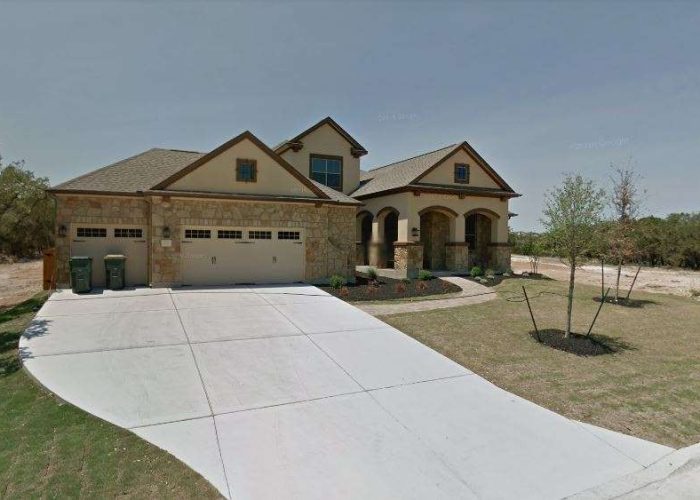
A driveway is the hardest-working slab on the property. It carries a vehicle every day, it takes the full sun, and in Austin it sits on clay that moves with every wet and dry spell. When the original builder poured it thin and skipped the steel, you get the tilted panels and the crack along the garage that most of our replacement calls start with. We build driveways that don’t do that. If you’ve already got a driveway that needs to go, get in touch and we’ll come out, measure, and tell you what we’d do.
This page covers new driveways, full replacements, extensions and widening, aprons, and turnarounds. If the driveway is mostly sound and you just need cracks or a sunken panel dealt with, that’s on our concrete repair page. And if the first question is what the job costs, our driveway cost guide explains the factors so the number makes sense when you get it.
How we build a concrete driveway
The base decides everything. We strip whatever is there, cut to grade so the driveway drains away from the garage, and compact gravel in lifts rather than dumping it and calling it level. On clay lots, standard practice moistens and recompacts the subgrade before the gravel goes in, because dry clay under a base opens a void with the first long dry spell. The slope matters too: enough to drain, not so much that the front bumper scrapes the apron.
Steel goes in on chairs, held in the middle of the slab. Four inches is the residential standard, with thicker sections at the apron and turnaround sized to the load and written into the scope; we screed to grade, broom the surface, and cut control joints the same day so the slab cracks where we told it to instead of where it wants to. Our driveway thickness guide explains why thickness matters less than steel and base on this soil. You can walk on it the next day; keep the car off for about a week, and we’ll tell you exactly when.
Replacements, extensions, and widening
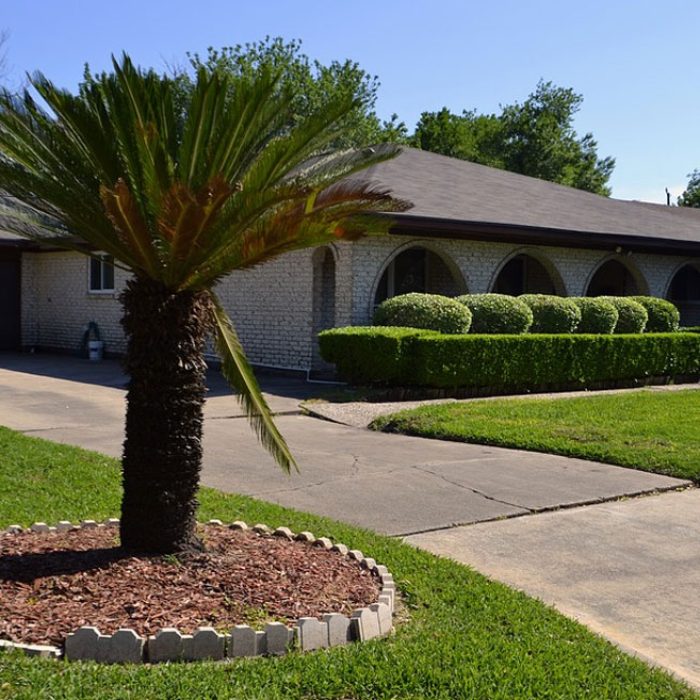
Replacement means tear-out, and tear-out is where the surprises are. We break and haul the old slab, and once it’s up we see what the builder actually put down. In a lot of 1980s and 1990s subdivisions there’s no base at all under the old slab, just concrete on dirt, which is why the old driveway failed and why the new one gets a proper base. We’ll show you what we found before we pour.
Extensions and widening tie new concrete into old with dowels drilled into the existing edge, so the two move together. We match the finish as closely as the original allows and put the joint where it’s least visible. If the existing driveway has already heaved, we’ll recommend replacing that section rather than tying a level extension to a tilted one. Turnarounds and parking pads follow the same rules and usually go in during the same mobilization as a new patio if you’re doing both.
Gravel to concrete conversions
A gravel driveway that’s tired of ruts, washouts, and tracked-in rock is a common conversion, especially on longer lots at the edges of the city. The existing gravel helps, but it isn’t a base on its own: years of tires push it into the clay unevenly, so it’s regraded, topped up where it’s thin, and compacted in lifts before any forms go in. Then the lane is built like any driveway that has to last, with steel on chairs, thickened edges where it meets the street, and control joints planned for the full length rather than guessed. Long runs need drainage attention too, since a concrete lane sheds water faster than gravel ever did, and that water needs somewhere to go. The written scope spells out how much of the old gravel stays, what’s added, and where the joints fall.
Finishes and how the driveway meets the street
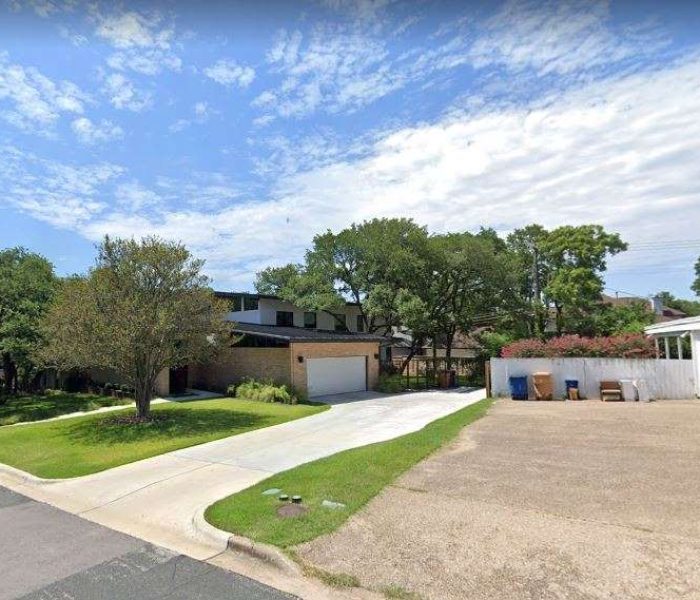
Broom finish is standard and it’s what we recommend for a driveway: it’s slip-resistant when wet, it hides tire marks, and it doesn’t need resealing on a schedule. It’s the finish we pour on every driveway. We’ll talk through the asphalt versus concrete decision if you’re still weighing it, and the short version is that concrete costs more up front and less over its life. Where the driveway meets the street, the apron and any curb cut have to match the city’s spec, and we handle that as part of the job rather than leaving it to you.
Why homeowners hire us for driveway work
We’ve been pouring driveways in Central Texas since 2012, and we’re fully insured. Our own crew does the tear-out, base, steel, and pour, so the person who quoted the job is the one standing in the excavation when the old slab comes up.
Every driveway comes with a written scope that lists thickness, steel, base depth, and joint layout before we pour, and we reply to every message the same business day. Reviews and our story are on the About page. And we’ll say when replacement is the wrong call: a driveway with a couple of hairline cracks and no movement doesn’t need to be torn out, and we’d rather tell you that than sell you a pour.
Where we pour driveways around Austin
We pour driveways across Austin and the cities around it. North in Cedar Park, TX and Leander, TX, most of the work is replacements in subdivisions built in the 1990s and 2000s, where builder-grade driveways were commonly poured without steel, and the tilted panels along the garage line are the giveaway. In Georgetown, newer lots often need a longer driveway than the builder allowed for, and extensions are the most common call.
West of town in West Lake Hills and Bee Cave, the lots slope and the driveways are long, so drainage and joint layout matter more than usual, and rock a foot down slows the excavation. Inside Austin, older neighborhoods mean narrow lots, shared approaches, and city right-of-way rules at the curb, and the right-of-way question gets asked before a curb cut is quoted, because the answer changes the price. We work around Central Texas heat with early pours in summer so the finish crew isn’t racing the surface.
Concrete driveway questions we hear most
How thick should a concrete driveway be in Austin?
Four inches is the residential minimum for a driveway that carries cars and light trucks. We go thicker at the apron and anywhere a heavy vehicle will park, and we always add steel. On expansive clay, base compaction and steel do more to prevent cracking than an extra inch of concrete, which is why the base gets so much attention on our jobs.
How long does it take to replace a concrete driveway?
Most residential replacements take three to five days: a day for tear-out and haul-off, a day or two for base and forms, and a day to pour and finish. Then keep the car off for about a week. Weather, a long driveway, and finding no base under the old slab can each add a day. We’ll give you a schedule in writing.
Do I need a permit for a new concrete driveway in Austin?
Often yes inside the city, because a driveway changes impervious cover and touches the public right-of-way at the curb. The City of Austin Development Services Department sets those rules, and the suburbs each have their own. We’re your permit partners: we’ll tell you what your project triggers and coordinate the paperwork, through a permitting partner when the filing needs one.
Should I choose concrete or asphalt for a driveway in Central Texas?
Concrete, for most homeowners. Asphalt costs less to install but softens in Austin summers, needs resealing every few years, and lasts about half as long. Concrete costs more up front and then mostly leaves you alone. Our sealing guide covers what maintenance concrete actually needs, which is less than people expect.
Can you widen my existing driveway?
Yes, if the existing slab is level and stable. We drill and epoxy dowels into the old edge, pour the new strip at the same thickness, and match the finish. If the old driveway has heaved or sunk, we’ll recommend replacing that section first, because tying new concrete to a moving slab just moves the crack to the joint.
How long before I can drive on a new concrete driveway?
Walk on it the next day; keep vehicles off for about seven days, and longer for heavy trucks or trailers. Concrete keeps gaining strength for around a month, and the first week is when it’s most vulnerable. We’ll tell you the exact date when we finish, and the timeline is the same one we use on every slab.
Why is my concrete driveway cracking and sinking?
Usually because it was poured on uncompacted clay with little or no steel. The soil swells and shrinks with the weather, and a thin, unreinforced slab can’t bridge the gaps that opens. Tree roots and water pooling along the edges make it worse. Some of that is repairable and some means replacement; we’ll tell you which after we look.
Ready to stop parking on a driveway that's falling apart?
Call (512) 566-7530 or send the form below and we’ll come out, measure, and leave you a written quote. No pressure, and we’ll tell you if repair makes more sense than replacement.