
Concrete Contractors in Cherrywood, Austin
Ace Concrete Contractors Austin replaces driveways, pours backyard slabs, and repairs walks and steps across Cherrywood, the 78722 neighborhood between I-35 and Airport Boulevard. Every job here starts with the deep clay under the yard, because that’s what decides whether new concrete stays flat or tilts within a few years.
Cherrywood is full of 1930s to 1950s cottages and bungalows, many with their original driveways and walks still in place. After seventy-odd Austin summers on clay, a lot of that concrete has cracked, tipped toward the house, or dropped at the garage end. Most of it can be fixed one section at a time.


Request Free Quote

Cherrywood's ground, and why it moves
East of I-35, Austin sits on Blackland Prairie clay, and Cherrywood is right on top of it. This clay swells when it’s wet and shrinks when it’s dry, so the ground under a driveway rises in a rainy spring and drops in a dry August. One end of a slab can move while the other stays put, and the concrete cracks where the stress collects.
That’s why the same few problems show up all along the street: a crack across the driveway a few feet from the garage, a walk panel tipped toward the porch, a back slab split down the middle. Our Blackland clay explainer goes deeper on how this soil behaves, and the east side coverage page covers the wider area around Cherrywood.
Driveways beside the house
Many Cherrywood homes have a long, narrow driveway that runs beside the house to a carport or detached garage in back. Those driveways often went in thin, straight on the dirt, with no base and little or no steel. Decades later, the sections near the street and the garage tend to sink or tilt first.
When most of the driveway still sits flat, we cut out the failed sections, rebuild the base, and pour new concrete that ties into the sound part. When it’s cracked through from end to end, it’s replaced. Either way, the new work goes in on compacted gravel with steel set mid-slab and control joints cut the same day. Our narrow driveway replacement page covers full tear-outs, and our post on why old driveways tilt shows what usually turns up underneath.
Slabs for sheds, studios, and workshops
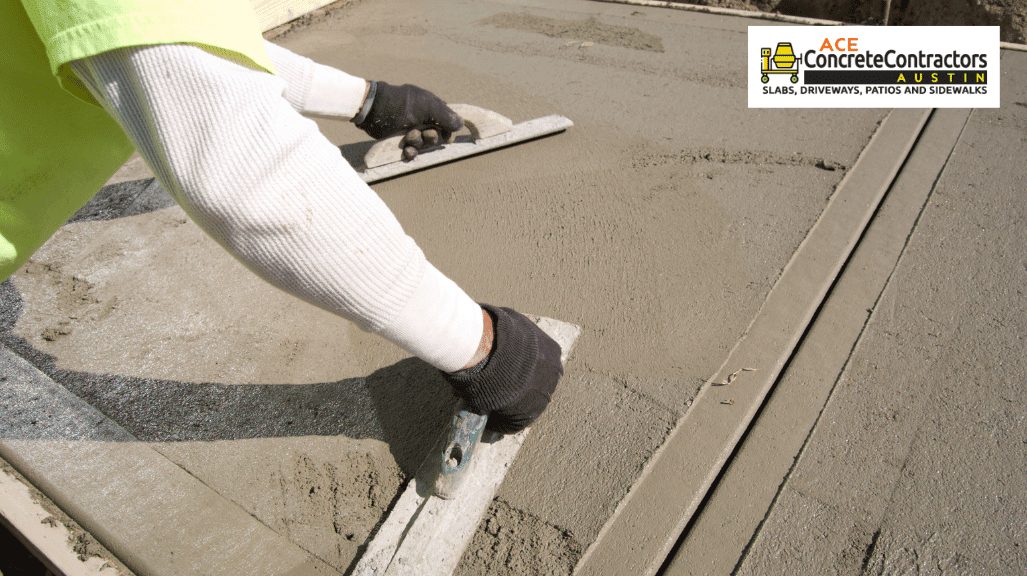
Backyards here are getting busier: garden sheds, small studios, workshops, and covered outdoor rooms. Each of them needs a slab that won’t rack or crack as the clay moves. A slab on Cherrywood clay starts with the subgrade wetted to a steady moisture, so dry clay can’t swell up under the new concrete, then a gravel base packed down in layers.
Thickness, edges, and steel are sized to what sits on the slab, and they’re written into the scope. Our clay-ready backyard slabs page walks through the full build. A permanent structure can trigger a City permit, and our shed slab permit rules guide explains when.

Walks, porches, and steps on older cottages
The front walk on a Cherrywood cottage is often its original concrete, with panels that have shifted out of line and edges that catch a toe. Porch steps tend to pull away from the house as the clay under them moves. Both are usually repaired by replacing just the failed pieces.
We cut out the panels or steps that moved, rebuild the base underneath, and pour new concrete with a broom finish that ties into what’s still sound. On steps, every rise comes out the same height. Our section-by-section repair page explains how we decide what stays, and our porch walk replacement page covers new walks from the street to the door.
Keeping water away from the concrete
Since clay moves with moisture, keeping water steady and away from concrete does more for its life than almost anything else. Point downspouts away from the driveway and slab. Grade soil so it falls away from the edges. Keep sprinklers off the concrete and the strip right next to it, and fill open joints so rain can’t reach the base. In a long drought, watering the yard evenly helps keep the ground from shrinking unevenly. Our runoff grading tips cover grading in more detail.
How a Cherrywood job runs
Send your address and a photo, and we’ll reply the same business day. The measuring visit looks at the soil, the slope of the lot, which sections have moved, where water goes, trees, and how the truck reaches a narrow driveway or a backyard. After the visit, you’ll get a written, itemized scope with tear-out, base, steel, joints, finish, and cleanup, each on its own line.
Ace is veteran-owned, our own crew does the pouring, and the person who measured your job is on site for the pour. Nearby, we also work on Mueller’s newer streets just east of Airport Boulevard and across I-35 in Hyde Park’s bungalow blocks.
Concrete questions from Cherrywood homeowners
Can one tilted driveway section be replaced on its own?
Yes, as long as the rest of the driveway sits flat and tight. We saw-cut around the failed section, remove it, fix the base underneath, and pour new concrete doweled into the sound slab so the two move together. The new section won’t match the old color exactly at first, but it blends in over time.
What goes under a new slab on Cherrywood clay?
Subgrade brought to a steady moisture first, then a gravel base packed down in layers. The steel sits mid-slab on chairs, not on the ground, and control joints are cut the same day. Thickness and edges are sized to the load. Skipping the base is the most common reason old slabs here have cracked and tipped.
Do I need a permit for a backyard shed or workshop slab?
It depends on what goes on it. A small slab for a garden shed often doesn’t need one, while a slab for a larger or permanent structure, or one that pushes the lot’s paved area up, usually does. We check that at the measuring visit and coordinate any filing through a permitting partner.
How do I keep water from getting under my concrete?
Send roof water away from it, grade the soil so it slopes away from the edges, and keep sprinklers from soaking the concrete or the strip beside it. Fill open joints and cracks so rain can’t reach the base. Steady moisture in the yard helps too, since uneven drying is what makes clay pull away from one side.
Can a narrow driveway be widened on a small Cherrywood lot?
Often, yes. A widening is poured as a new section tied into the existing driveway, on its own compacted base. Before planning it, check how much paved area your lot already has, since Austin limits impervious cover. The curb cut at the street may also need a permit if it gets wider.
How long does a driveway section repair take?
Most section repairs take two or three working days: one to saw-cut and remove, one to rebuild the base and set forms and steel, and one to pour. The new section then needs about a week before you drive on it. The timeline goes into your written scope.
Request a Free Estimate and send a few photos of the area. We’ll reply the same business day.