
Concrete Slab Contractors Serving Austin, TX
Concrete slabs in Austin, TX are poured, steel-reinforced pads for garages, sheds, workshops, carports, and equipment, built on compacted base over expansive clay. We grade, form, reinforce, and pour slabs sized to what they’ll carry, then cut joints so they cure without random cracking.


Request Free Quote
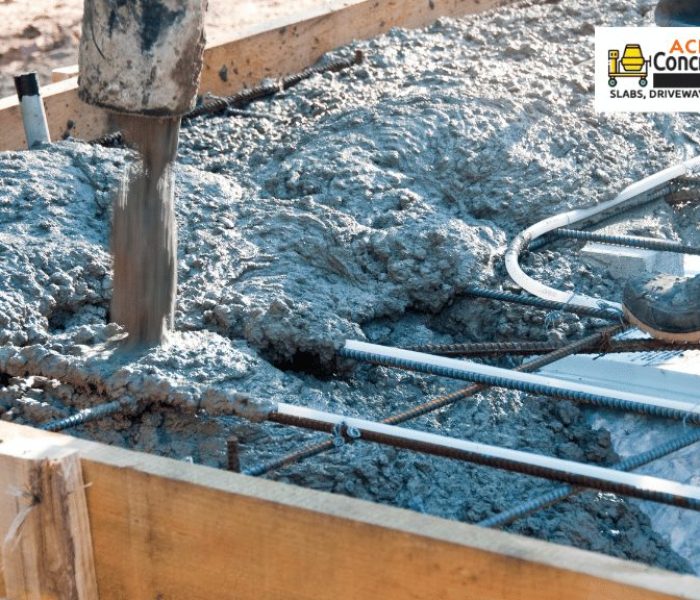
Most slab jobs start with a phone call that goes something like this: I’m putting up a shed, or a workshop, or a carport, and the kit says I need a level pad. What the kit doesn’t say is that a pad on Austin clay needs more than a flat spot. It needs a compacted base, steel, and edges thick enough that the corners don’t lift when the ground moves. That’s the slab we pour. If you already have dimensions from the building supplier, reach out to us and we’ll price it from the drawing.
This page covers slabs for garages, sheds, workshops, carports, hot tubs, and equipment such as generators and AC units. It doesn’t cover house foundations, which are a different trade with a different engineer. If you’re mostly wondering what a slab costs, our concrete slab cost guide breaks down what moves the number, so this page can stay on how the work is done and what to ask for.
How we pour a concrete slab
Every slab starts with the ground under it. We strip topsoil, cut to grade, and compact a gravel base in lifts, because a base that’s dumped and leveled but never compacted settles under the slab within a year. On clay lots, standard practice takes the base deeper than a generic spec and wets and recompacts the subgrade before the gravel goes in; both make a measurable difference on this soil. A vapor barrier goes down where the slab will be enclosed, which is most workshops and garages.
Forms are set to the building’s footprint plus whatever overhang the plans call for, and we check them for square twice, because a shed kit doesn’t forgive a pad that’s an inch out. Steel goes in on chairs so it sits in the slab, not under it. We pour, screed, float, and cut control joints the same day. Slabs take light foot traffic the next morning and a building the following week; our slab curing guide covers what happens in between.
Garage, shed, and workshop slabs
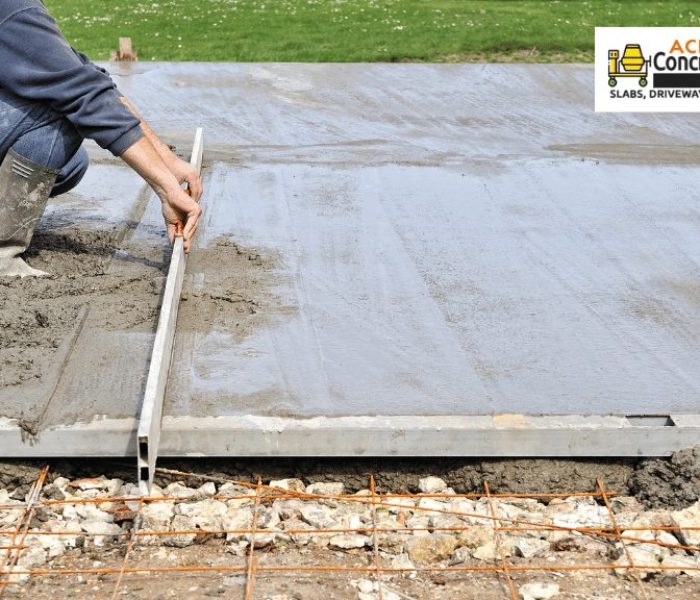
A garage slab carries a vehicle and, in most Austin garages, a lot of stored weight along the walls, so we pour thicker edges and a heavier steel grid than a shed pad gets. Workshop slabs usually want a smoother finish for rolling tool chests and a floor drain if the owner plans to wash things down. Shed pads are simpler but still get steel: a shed that racks because its pad cracked is a callback we’d rather not take.
Carport pads are their own case. They’re long, they carry point loads from tires, and they sit in full sun, so joint layout matters more than usual. Hot tub pads are small and heavy; we’ll ask for the filled weight before we quote. If what you actually need is a driveway that leads to the slab, our driveway page covers that pour separately, and we’ll usually do both in one mobilization.
Thickness, reinforcement, and edges
Four inches is the floor for a residential slab, and it’s fine for a shed or a light workshop. Garages, carports, and anything with a heavy machine on it get more thickness, sized to the load and written into the scope, with thickened edges, which act like a small footing around the perimeter and keep corners from lifting. Reinforcement is a rebar grid on chairs, spaced to the load and put in writing, and we don’t substitute fiber alone on a loaded slab. We’ll write the thickness and steel into the scope so you can check it against your building supplier’s spec before we pour.
Why homeowners hire us for slab work
We’ve poured slabs across Central Texas since 2012, and we’re fully insured. Our crew handles the whole job, grading through finish, and the person who measured your lot is on site for the pour, which is how we catch things like a gas line marked in the wrong place before the excavator does.
Every slab comes with a written scope that lists thickness, steel, base depth, and joint layout before we pour, and we reply to every message the same business day. More about how we work is on who we are. We’ll also tell you when a slab isn’t the answer: a small generator pad doesn’t need a full pour, and we’d rather say so than sell you one.
Where we pour slabs around Austin
We pour slabs across Austin and the suburbs north and east, which is where most of the new sheds and workshops are going in. In North Austin neighborhoods, older lots often carry a utility easement along the back fence, and it limits where a shed can legally sit, which is worth checking before the pad is laid out. Out in Pflugerville, TX and Round Rock, TX, newer subdivisions have HOA rules on accessory buildings, and a pad that’s poured before the approval comes through can turn into a problem.
Georgetown and Leander lots tend toward rock rather than clay, so excavation is slower but the base is more forgiving. West of town in Lakeway, TX, the challenge is slope: a level pad on a hillside means a cut on one side and fill on the other, and the fill side needs real compaction or the slab tilts. We schedule around Central Texas heat too: summer slab pours start at first light so the finish crew isn’t fighting a surface that sets before they reach it.
Concrete slab questions we hear most
How thick does a concrete slab need to be for a garage?
Four inches is the residential minimum and works for a single car with nothing else on the slab. Standard practice goes thicker for a two-car garage or a workshop with heavy equipment, with thickened edges around the perimeter. Thickness and steel spacing go in the written scope so you can compare it to your building supplier’s requirements.
Do I need a permit for a shed slab in Austin?
It depends on the size of the building going on it and where it sits on the lot, more than on the slab itself. The City of Austin Development Services Department sets accessory-structure rules, and suburbs have their own. We’re your permit partners: we’ll tell you what your project triggers and coordinate the paperwork, through a permitting partner when the filing needs one.
How long before I can build on a new concrete slab?
Light foot traffic is fine the next day. We recommend waiting about a week before framing or setting a shed kit, and longer for heavy equipment. Concrete keeps curing for around a month, so avoid dragging steel across it or anchoring into it during that first week. We’ll tell you when it’s ready.
Who does concrete slabs austin homeowners can rely on for sheds and workshops?
Look for a contractor who talks about base compaction and steel before they talk about price, and who writes the thickness into the scope. We’d like to be on that list. Our how to pour a slab guide explains what a proper pour involves, so you can hold anyone you call, including us, to it.
Can you pour a slab on a sloped lot?
Yes. We cut into the high side, fill and compact the low side in lifts, and pour with thickened edges so the fill side is supported. On steeper slopes a short retaining wall or a stepped slab makes more sense than a deep fill, and we’ll say so. The key is compaction on the fill side, which is where most hillside slabs fail.
Why do concrete slabs crack in Central Texas?
Expansive clay is the main reason: it swells with rain and shrinks in drought, and a slab poured on uncompacted soil without steel or control joints cracks when the ground moves. Tree roots, poor drainage, and slabs poured too thin for the load are the other usual causes. Our concrete crack guide covers which cracks matter.
Do you pour house foundations?
No. Foundations are a separate trade with an engineer’s design behind them, and we stay in our lane: garages, sheds, workshops, carports, patios, driveways, sidewalks, and repair. If you need a foundation contractor we’re happy to point you toward the kind of firm to call, but we won’t quote it ourselves.
Call (512) 566-7530 or send the form below with your dimensions and we’ll price it from the drawing. We’ll confirm thickness and steel in writing before anything is scheduled.