What a Hard Freeze Does to an Austin Driveway, and What to Do About It
- Ace Concrete Contractors Austin
- Concrete Tips & Advice
Ace Concrete Contractors Austin

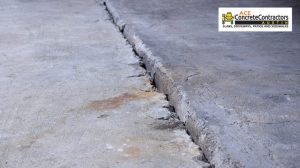 A hard freeze damages Austin driveways mostly through water: moisture in cracks, joints, and the surface expands as it freezes, widening cracks and flaking the top layer. Burst pipes and sprinkler leaks can wash out the base too. Most freeze damage is repairable when it’s caught early.
Austin doesn’t freeze often, and that’s exactly why a hard freeze leaves a mark. Northern driveways are built and maintained for months of cold. Ours spend most of the year baking, so when a storm like February 2021’s or the 2023 ice storm rolls through, the concrete meets conditions it rarely sees, and the weak spots show up fast. The good news is that a well-built driveway rarely fails from a freeze alone. The damage almost always starts where water already had a way in, which our full ownership picture touches on and this guide covers in detail.
Concrete is porous. It soaks up a little water through its surface and a lot through open cracks and joints. When that water freezes, it expands by roughly nine percent, and it pushes on whatever’s holding it. One freeze rarely does much. A few nights of freezing and thawing, with rain or melting ice in between, can pry a crack wider or pop the top layer off a weak surface. Our freeze-thaw science explainer goes into why.
Two local habits make it worse. Sprinklers and downspouts keep a lot of Austin driveways damp right up to the cold snap, so the concrete goes into the freeze already wet. And most driveways here weren’t poured with freeze in mind, because they didn’t need to be. Neither is a reason to panic. They’re reasons to look closely once the ice is gone.
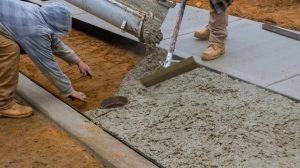
Surface scaling comes first. The top layer flakes or peels in patches, leaving a rough, pitted surface underneath. It’s usually cosmetic at the start, but scaled concrete soaks up more water, so it gets worse with each freeze if nothing’s done.
Widened cracks and open joints come next. A hairline crack that held water can come out of a freeze noticeably wider, and joint filler that was already tired can pop loose. Neither is an emergency, but both let more water reach the base.
The third kind hides underneath. A burst pipe, a broken sprinkler line, or a frozen hose bib can run for hours and carry soil out from under the slab. Weeks later, a panel near the house or the street starts to sink. That’s the damage that turns a small problem into a section replacement.
The last one comes from above. Ice-loaded limbs can break off and land on the driveway, cracking panels or chipping edges. That’s a judgment call for your insurer, so photos taken right after the storm matter.
Rock salt and other deicers melt ice, but they also push more water into the surface and can speed up scaling, especially on concrete that’s less than a year old. Products with ammonium nitrate or ammonium sulfate are the harshest and are worth avoiding entirely. If you need traction, sand works and doesn’t harm the surface. Sweep or shovel slush off before it refreezes, and rinse away any deicer residue once temperatures climb.
A sealed surface holds up better against all of this. If your driveway hasn’t been sealed in a few years, our sealer timing guide explains when it’s worth doing and how to tell if a sealer’s still working.
Most of the prevention is about keeping water out. Fill open cracks and refill failed joints in the fall, while the weather’s still mild enough for the filler to cure. Turn off and drain irrigation that runs near the driveway before the first hard freeze, and fix sprinkler heads that spray onto the slab. Point downspouts away from the edges. And don’t pressure wash the day before a cold front, since that soaks the surface right when it needs to be dry.
Most freeze damage is repairable. Scaling on a slab that’s otherwise sound can be patched or resurfaced, and widened cracks can be cleaned and sealed. Sections that sank after a pipe or sprinkler leak need more: the panel gets cut out, the washed-out base is rebuilt, and new concrete is poured and tied into the old. Our freeze-season repair options page explains how we decide between those. Replacement only makes sense when the damage is widespread or the driveway was already failing before the storm. After a freeze, the post-freeze inspection checklist walks you through what to look for, step by step.