
A concrete driveway’s advantages are lifespan, low upkeep, and indifference to Texas heat: it doesn’t soften in summer, doesn’t need resealing on a schedule, and typically outlasts an asphalt driveway by decades. The tradeoffs are higher upfront cost and less forgiveness for a bad base.
We pour concrete driveways for a living, so you’d expect us to recommend them. Here’s the more useful version: we’ll tell you exactly why concrete wins for most Austin homes, and the two situations where it doesn’t. A driveway is the hardest-working slab on a property, carrying a vehicle daily through summers that punish asphalt and clay that punishes everything, and it’s also the piece of concrete guests and buyers see first, which is why the decision deserves more than a price comparison. The case for concrete is what it doesn’t do in those conditions. Our driveway service page covers how we build one; this guide is about whether you should.
It doesn’t care about Texas heat
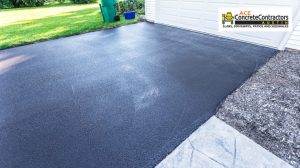
Asphalt is a petroleum product, and Austin summers soften it; that isn’t a knock on asphalt everywhere, it’s a knock on asphalt here. Tires scuff it, kickstands sink into it, and the surface sheds gravel as the binder ages, which is why asphalt carries a sealing schedule. Concrete’s strength doesn’t change on a hot afternoon. A light broom-finished slab also stays meaningfully cooler underfoot than black asphalt, which matters more than people expect on the walk to the mailbox in July. Heat is the single biggest reason the comparison tilts concrete in Central Texas, and our asphalt comparison guide covers the head-to-head in full.
It outlasts the alternatives, and the math follows
A properly built concrete driveway is a decades-long asset; asphalt’s lifespan here is roughly half, with resurfacing along the way, and gravel is a permanent maintenance chore that migrates into the lawn and washes toward the street every time it storms. Concrete costs more on the day you buy it, and then it mostly leaves you alone. Spread over the years you’ll own the driveway, the more durable slab is routinely the cheaper one, and it’s the only option of the three that reads as a finished improvement when a buyer walks the property. Our property value guide guide covers the resale side, and our driveway pricing factors explains what actually sets the upfront number, since size alone doesn’t.
Upkeep is an afternoon, not a schedule
Concrete’s maintenance list is short, and it’s the kind you do when you notice rather than the kind you schedule: keep the control joints filled so water stays out of the base, rinse the surface a couple of times a year, and treat oil or rust stains when they happen. That’s the whole program for a broom-finished slab. Sealing is optional protection rather than a survival requirement, which is the opposite of asphalt’s relationship with sealer. Our sealing guide guide covers when it’s worth doing. The one job concrete does ask of you is drainage awareness: water pooling along an edge is how the base under any driveway erodes, so gutters and grading earn their keep here too.
The honest tradeoffs
Two situations favor the alternatives. If the budget genuinely can’t reach concrete this year, a well-built asphalt driveway beats a cheap concrete one, because a slab poured thin on a bad base is the worst of both worlds. And if heavy equipment will use the driveway regularly, the design conversation changes: thickness, steel, and joint layout all move, and that should be priced honestly rather than discovered.
Cracking deserves a straight answer too. All concrete cracks; a driveway built for clay soil cracks inside its control joints where it’s invisible and harmless. The horror-story driveways with random cracks across every panel are base and steel failures, and they’re avoidable. That’s the difference between buying concrete and buying a concrete driveway built right, and it’s why we put base depth and steel spacing in writing on every quote. Our thickness guide explains how those specs get chosen, and it’s worth reading before you compare anyone’s numbers, because two quotes that look far apart often describe two different slabs.