
Concrete Contractors in Mueller, Austin
Ace Concrete Contractors Austin builds patios, extends existing slabs, and pours side walks and backyard pads across Mueller, the planned community on the old airport site in 78723. Mueller lots are small and many garages open to an alley, so every job is planned around design review, tight access, and the clay underneath.
Mueller homes are newer than most of Austin’s, and the questions we hear are newer too. Owners want more usable outdoor space, a patio that ties into the builder’s slab, or a pad for a shed, and they want it approved, poured, and cleaned up without upsetting the neighbors on a shared alley.


Request Free Quote

Small lots, alleys, and design review
Mueller was built in phases from the late 2000s on, around parks like Mueller Lake Park and the hike-and-bike trails. Homes sit close together, backyards are compact, and many lots have rear-loading garages on an alley. That layout shapes how concrete gets delivered: often from the alley, sometimes through a narrow side yard, and occasionally by pump when a truck can’t get close.
The community has its own design guidelines, and new patios, pads, and walks usually need approval before work starts. We give you a drawing and a written scope for the submission, and we don’t pour until it’s approved. Our review board submission tips cover what boards tend to ask for.
Patios and patio extensions
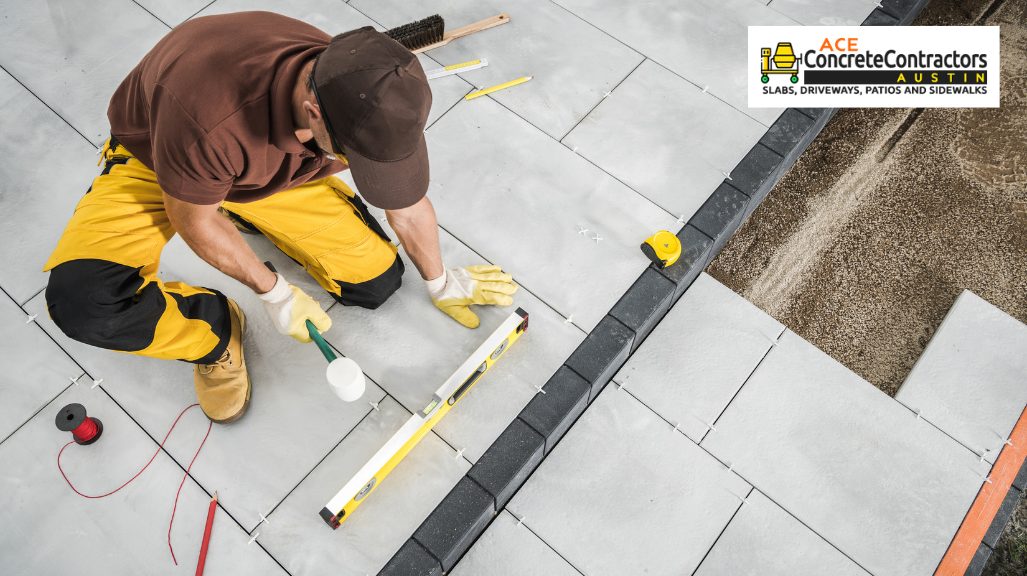
Most Mueller homes came with a small builder patio, and the most common request is to make it bigger. A patio extension is poured as a new section tied into the existing slab, on its own compacted base, with a joint where the two meet so they can move without cracking each other.
On a compact lot, every square foot counts, so layout matters: where the table goes, where people walk, and where the water ends up. Our compact patio extensions page walks through layout and finish. Every patio gets a broom finish for grip.
One detail matters more than people expect: height. The new section has to meet the old slab flush, stay below the door threshold, and still fall enough to drain. On a small patio, that leaves little room for error, so the levels are worked out at the visit and written into the scope. Done right, the extension looks like it was always part of the house.
Clay under a new neighborhood
Mueller sits east of I-35 on Blackland clay, the same soil that cracks older driveways across the east side. Newer homes don’t escape it. Builder patios and walks that went in quickly can settle, tip toward the house, or crack within a few years if the base was thin or water collects beside them.
New work here goes in on prepared ground and a compacted gravel base, with steel set mid-slab and joints cut the same day. Our explainer on how east-side clay moves shows why the base matters so much on this soil, and the east Austin area guide covers the wider area around Mueller.
Side walks, pads, and small builds
Side yards in Mueller are narrow, and a walk from the alley or the street to the back door makes them far more usable. Walks are poured on a compacted base with a broom finish and pitched so water runs away from both houses. Our side-yard walkways page covers layout and joints.
Backyard pads for sheds, grills, and bike storage are small but still need the right base and edges on clay. Keeping a pad a few inches above the surrounding soil and pitching it slightly helps it stay dry. Our small backyard pads page covers how pads are sized to what sits on them.
Water on a small lot
With houses close together, water has nowhere to hide. A new patio or walk has to shed rain away from your house and away from the neighbor’s, usually toward the yard or the alley drainage. Roof water from downspouts should be pointed away from new concrete, and sprinklers kept off it. Our guide to small-lot drainage covers grading in more detail.
How a Mueller job runs
Send your address and a photo, and we’ll reply the same business day. The measuring visit looks at the existing slab, the soil, drainage between houses, alley and side-yard access, and what the design review will want to see. After that, you’ll get a written, itemized scope with base, steel, joints, finish, and cleanup, each on its own line.
Ace is veteran-owned, our own crew does the pouring, and the person who measured your job is on site when it’s poured. Next door, we also work in Cherrywood’s cottage streets just west of Airport Boulevard, and across I-35 in Hyde Park’s older bungalows.
Concrete questions from Mueller homeowners
Does Mueller's design review need to approve a new patio?
In most cases, yes. New patios, pads, and walks visible from the street or a neighbor’s lot usually go through the community’s design review. We give you a drawing and written scope to include with the submission, and we don’t schedule the pour until the approval is in hand. Check your guidelines early, since review takes time.
How big a patio can fit a Mueller backyard?
It depends on the lot, setbacks, easements, and how much paved area the lot already has. Many Mueller backyards fit a modest patio plus room to drain into the yard. We measure the space, mark where water will go, and size the patio to what fits and what the review will approve.
Can the concrete truck reach my backyard from the alley?
Often, yes. Many Mueller backyards can be reached from the alley through the garage side or a gate. When a truck can’t get close enough, concrete can be pumped in or moved by wheelbarrow. We check access at the measuring visit and list the method in the scope, so there are no surprises on pour day.
Can a new patio tie into the builder's original slab?
Yes, if the original slab is sound and sitting flat. The new section goes on its own compacted base and is tied to the old slab with a joint between them, so each can move a little without cracking the other. If the builder patio has already tipped or cracked badly, replacing it may be the better choice.
Why is my newer Mueller patio already cracking?
Usually because of the clay and the base under it. Builder patios sometimes go in on a thin base, and water from downspouts or sprinklers can keep one side wetter than the other. As the clay swells and shrinks, the slab cracks or tips. Fixing the water and the base is part of any repair.
How long does a small patio project take?
Most small patios and extensions take a few working days: one to prepare the ground and base, one to set forms and steel, and one to pour. You can walk on it in a day or two, but it needs about a week before heavy furniture or a grill goes on. The timeline goes into your scope.
Request a Free Estimate and send a few photos of the area. We’ll reply the same business day.