

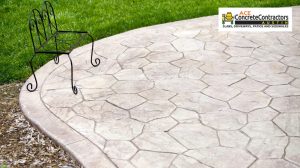
 Patio finishes range from broom, the practical default, through salt and exposed aggregate textures, to stamped patterns with color, plus integral color that runs through the mix. They differ most in upkeep and grip, and in Austin, in how hot the surface gets underfoot.
Finish is the decision you’ll look at every day, and it’s also the line that moves a patio quote most after size, so it deserves a real comparison instead of a photo gallery. Here’s every finish we pour, what each one asks of you later, and the two Austin-specific factors people forget: grip when the sprinkler’s been on, and surface temperature in July. The broader patio decisions live in our patio fundamentals; the money side lives in our finish pricing impact.
Broom finish: the default for a reason
The surface is dragged with a broom while the concrete is green, leaving fine parallel texture. It grips wet, hides small imperfections and future patches, needs no sealing schedule, and costs the least in labor. Its only real criticism is familiarity. If the patio is a floor for living rather than a design statement, broom wins, and it’s the finish we pour on every patio.
Texture upgrades: salt and exposed aggregate
A salt finish presses coarse salt into the fresh surface, then dissolves it out with water, leaving a subtle speckled pitting that reads more finished than broom without changing the maintenance story much; it’s a quiet upgrade for anyone who wants better than plain without a maintenance schedule. Exposed aggregate washes away the top paste to reveal the stone in the mix, which is genuinely handsome, extremely grippy, and durable, with two costs: it’s rougher on bare feet and harder to patch invisibly if the slab ever needs repair. Both sit between broom and stamped on price, and both are specialty finishes we don’t pour.
Stamped concrete: the look with a lease
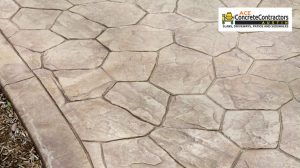
Stamping presses a pattern, stone, slate, wood plank, into colored concrete, and it’s the finish people bring photos of. The honest version: it’s the most labor on pour day, it needs sealing and periodic resealing to keep its color and sheen, and sealed surfaces can be slick when wet unless an additive goes in the sealer. Pattern scale matters too; a busy stamp on a small slab looks crowded, which is why pattern and patio size should be chosen together.
Color, heat, and the July test
Integral color mixes pigment through the batch so it can’t wear off; surface treatments like stains sit on top. Both belong to decorative specialists rather than to us. Whatever finish you pick, color choice is also a temperature choice: dark surfaces in full Austin sun get uncomfortably hot barefoot, light ones stay usable. It’s the least glamorous factor in this guide and the one you’ll notice most often. When you’ve narrowed it to two, ask the contractor you hire for a sample panel before the pour, and the sealing by finish decision follows the finish you land on.
Matching finish to how the patio actually gets used
The comparison gets easier once the patio has a job description. Barefoot pool deck: texture first, so salt or broom, in a light color, and any sealer gets grit. Outdoor dining room: broom or salt keeps chairs sliding smoothly where heavy stamping catches chair legs, a detail nobody mentions until the third dinner. Showcase courtyard that’s swept more than lived on: stamped earns its keep there, since the maintenance schedule meets a surface that isn’t being worn daily. Play area for kids: broom, no contest, because grip and patchability beat pattern every time a scooter’s involved. When one patio serves several jobs, a border-and-field combination, plain durable field with a decorative band, gives each zone the surface it wants without pricing the whole slab at the fanciest finish. It’s also the combination that repairs most gracefully years later, since a patched broom field disappears where a patched stamp pattern never quite does, and patios live long enough that the repair question isn’t hypothetical.