What a Central Texas Freeze Actually Does to Concrete
- Ace Concrete Contractors Austin
- Concrete Tips & Advice
Ace Concrete Contractors Austin

A freeze damages concrete through the water inside it. Water held in the surface pores expands about nine percent as it turns to ice, and when the pores are nearly full, that pressure breaks the surface. Repeated freezing and thawing does the damage, and wet concrete suffers most.
Concrete looks solid, but it isn’t. Under a microscope it’s a sponge of tiny pores and channels left behind as the mix water was used up or dried out. Most of the time those pores hold a mix of air and moisture, and nothing happens. A freeze changes that, and in Central Texas it tends to catch concrete at its most vulnerable.
This guide explains the mechanism: what’s happening inside a slab when the temperature drops. If you’re looking for what to do about it, our driveway freeze damage guide covers the practical side, and the after-freeze walkaround checklist covers what to look for once the ice is gone.
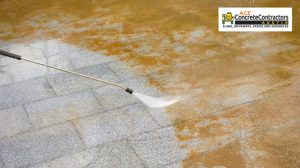
Dry concrete doesn’t care about cold. A slab with air in its pores can sit through a hard freeze without a mark, because ice has room to form. The trouble starts when the pores near the surface are close to full. Water expands by roughly nine percent as it freezes, and in a full pore there’s nowhere for that extra volume to go. The ice pushes outward, and it also shoves the unfrozen water ahead of it through the surrounding concrete. Both create pressure the surface wasn’t built to hold.
That’s why the same freeze can ruin one driveway and leave the one next door untouched. The difference is usually how wet each slab was when the cold arrived.
One freeze rarely does visible harm. Each one opens tiny cracks, which let in more water, which makes the next freeze worse. Damage builds with every trip across the freezing point, and a Central Texas ice event packs several of those into a few days: below freezing at night, above it by afternoon, with melting ice soaking the surface in between. Three or four of those cycles on a wet slab can do what years of dry cold wouldn’t.
Up north, exterior concrete is built for this. Mixes are routinely air-entrained, slabs are sealed, and nobody runs sprinklers in January. Here, the opposite is often true. Freezes are rare enough that plenty of flatwork was poured without air entrainment, sprinklers and downspouts keep slabs damp year-round, and many driveways have never been sealed. None of that is negligence. It’s what makes sense in a place that bakes eight months a year. It just means that when a hard freeze does arrive, a lot of local concrete meets it wet and unprotected.
Air-entrained concrete has billions of microscopic bubbles mixed into it on purpose. They aren’t connected to each other, and they stay mostly empty even when the slab is wet. When water in the pores freezes and needs somewhere to go, those bubbles act as relief chambers a hair’s width away. The pressure drops before it can crack anything. It’s a small change at the batch plant, and it’s the main reason northern sidewalks survive hundreds of freeze-thaw cycles. Our post with concrete mix types explained covers where it fits among the other mix choices.
New concrete is a separate case. For the first couple of days, a slab is still full of mix water and hasn’t gained much strength. If that water freezes, the damage isn’t cosmetic. The concrete can end up weak all the way through. That’s why winter pours get scheduled around cold fronts, and why a slab poured ahead of a cold night gets covered with insulating blankets to hold in its own heat. Concrete makes warmth as it cures, and keeping that warmth in is usually enough. Our slab cure timeline explains what’s happening during those early days.
Salt doesn’t attack concrete directly so much as it makes freezing worse. It melts ice into brine that soaks into the surface, so the pores end up fuller than plain rain would leave them. It also lowers the freezing point, which means the surface can freeze and thaw more times in one cold spell. And where the salty layer meets the fresher water below it, the two freeze at different moments, which adds stress. Deicers made with ammonium compounds are different and worse, because they react with the concrete itself. Young concrete is the most at risk from all of them.
In cold climates, the ground itself freezes deep enough to heave slabs upward. That’s rare in Austin. Our freezes are too short for frost to reach far below the surface, so the ground under a slab generally stays put. When concrete moves after a Texas freeze, the cause is almost always water: a burst pipe or broken sprinkler line that washed out the base. So the two things to watch after a freeze are the surface and any leaks. If either shows damage, our surface damage repair choices page explains what can be fixed and how.