
Concrete Contractors in Travis Heights, Austin
Ace Concrete Contractors Austin rebuilds front steps, replaces steep driveways, and pours walks and patios across Travis Heights, the hilly 78704 neighborhood between South Congress and I-35. Every job here is planned around slope, older homes, mature trees, and the water that runs downhill toward Blunn Creek.
Travis Heights is one of South Austin’s oldest neighborhoods, and its concrete shows its age. Front steps settle and crack, driveways climb from the street at angles newer subdivisions never see, and walks have been pushed around by roots for decades.


Request Free Quote
What makes Travis Heights concrete different
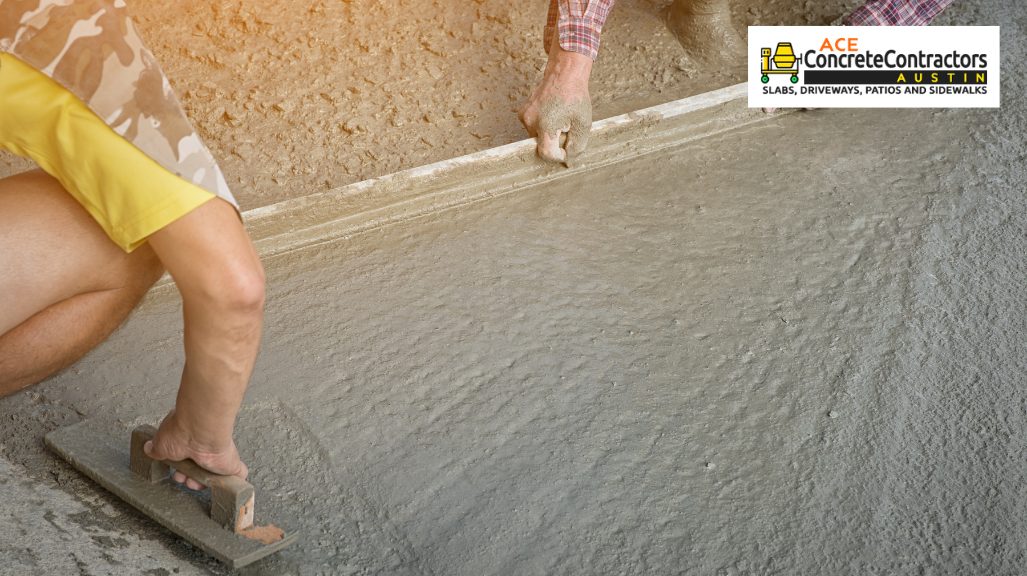
The neighborhood climbs from Lady Bird Lake toward Oltorf, cut through by Blunn Creek and its greenbelt. Many of its homes went up between the 1920s and the 1940s, on lots graded long before anyone planned for two cars and a back patio. Newer houses and remodels share the same hillsides, often well above the street.
Slope ties it all together. Water moves fast on a hill, so a step, walk, or driveway that doesn’t shed it gets undercut from below. The ground changes from block to block too, with clay in some yards and rock close to the surface in others, so the dig and the base get planned lot by lot instead of assumed. If you’re on the flatter streets south of Oltorf, our wider South Austin coverage fits that ground better.
Front steps and stoops
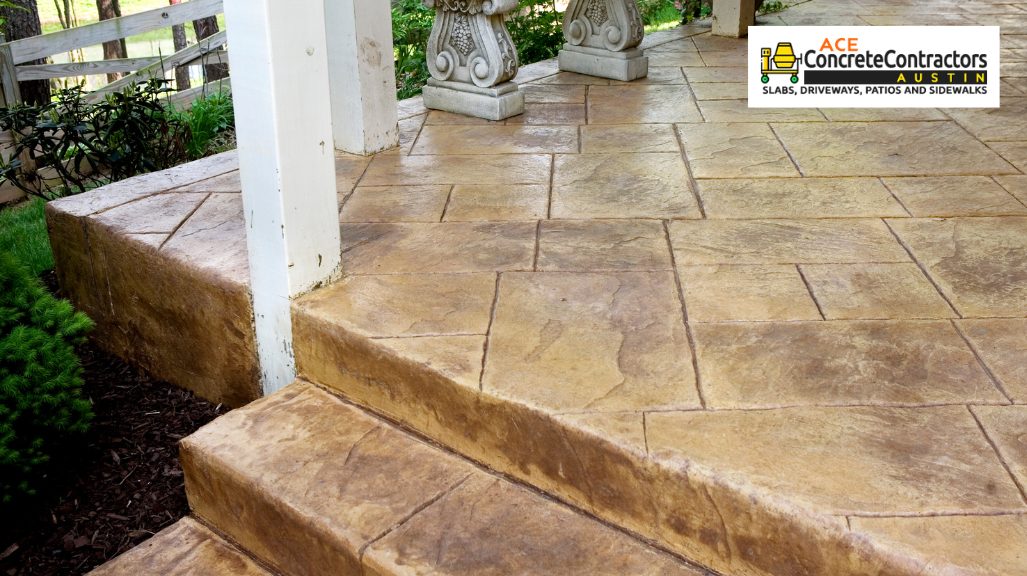
Front steps are the job we hear about most here. On older homes, they were often poured in stages, and now the treads crack, the edges break off, or the whole run pulls away from the porch. Steps that rock or tip are a fall risk, and they’re worse in the rain.
Some steps can be repaired: a broken edge rebuilt, a cracked tread replaced. When the run has settled or separated, it’s broken out and rebuilt on a compacted base with steel, even rises, and a level landing at the top, so every step is the same height. Each tread gets a broom finish for grip. Our front step rebuilds page explains when a repair holds and when the run has to go.
Driveways that climb from the street
Plenty of Travis Heights driveways rise hard from the curb, and a few drop to a garage tucked under the house. On a grade like that, three things matter: grip, the street transition, and water. The broom texture is pulled deeper so tires hold in the rain, the transition is shaped so bumpers clear it, and runoff goes to the sides, not into the garage.
Wet concrete on a hill can sag downslope, so the forms get braced harder and the pour order is set ahead of time. Thickness, base, and steel are sized to the slope and listed in the scope. Our steep driveway replacement page covers tear-outs, widening, and new aprons. The apron and curb cut sit in the City’s right-of-way, so that part may need a permit, and our right-of-way permit primer explains when.
Front walks, roots, and the public sidewalk
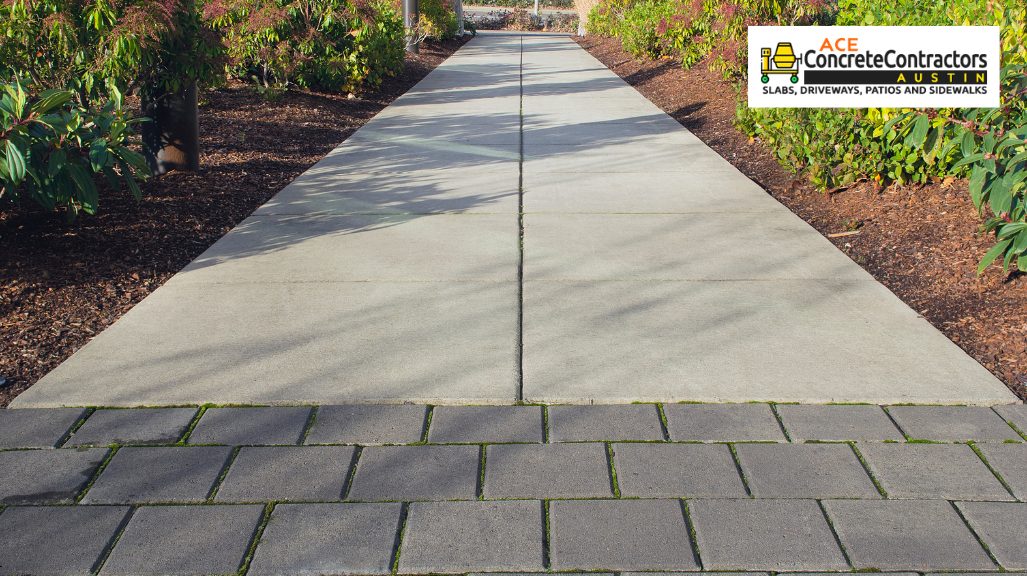
Big trees shade most streets here, and their roots have been pushing up walk panels for a long time. A raised edge catches a toe. We cut out the failed panels, deal with the root or washout underneath where we can, and pour new sections that tie into the sound ones. Austin’s tree rules protect larger trees and their root zones, so work near a big oak is planned around it, not through it.
The sidewalk along the street belongs to the City, and who handles a damaged section depends on the situation. Our lifted panel guide walks through how that process works, and our front walk replacement page covers new walks from the street to the porch.
Patios on sloped backyards
Backyards here often fall away from the house or toward the creek. A flat patio on that kind of lot starts as a grading job. It might step down in two levels, sit on a built-up base at the low side, or finish at a short curb that holds the grade.
Drainage gets planned first, so rain runs off the patio and away from the house without landing on the lot next door. Our sloped-yard patios page walks through layout and finish, and the backyard drainage planning guide goes deeper on grading.
Older homes, historic review, and permits
Part of Travis Heights sits inside historic district boundaries, and some homes carry their own historic designation. Whether that affects new steps, a walk, or a driveway depends on the property, so it’s worth checking your address with the City of Austin’s Historic Preservation Office before planning visible front work. We don’t pour until any required approval is in hand.
Most replacements on private property don’t need a permit, but work in the right-of-way or a change in paved area can. Lots near Blunn Creek can also run into impervious cover limits when a project adds concrete. When a permit is needed, we coordinate it through a permitting partner.
How a Travis Heights job runs
Send your address and a photo, and we’ll reply the same business day. The measuring visit looks at slope, steps, trees, drainage, where the truck can park on a narrow hillside street, and any historic review. After the visit, you’ll get a written, itemized scope with tear-out, base, steel, joints, finish, and cleanup, each on its own line.
Ace is veteran-owned, our own crew does the pouring, and the person who measured your job is on site for the pour. Close by, we also work across Bouldin Creek’s older blocks just west of Congress and the streets around Zilker’s park-side homes.
Concrete questions from Travis Heights homeowners
Do I need a permit to rebuild front steps in Travis Heights?
Usually not, if the steps sit on your own lot and you’re replacing them in the same spot at the same size. A permit can come into play if the work reaches the public sidewalk or right-of-way, adds paved area, or falls under a historic review. We check at the measuring visit and handle any filing through a permitting partner.
Can a steep driveway be replaced without changing the street apron?
Often, yes. If the apron and curb cut are sound and sit at the right height, the new driveway ties into them. If the apron is cracked, too steep, or scrapes cars, it’s usually replaced too, and because it sits in the right-of-way, that part may need a permit. The scope lists the apron as its own line.
How do you keep runoff from undercutting concrete on a sloped lot?
By planning where the water goes before the forms are set. Each slab is pitched so water runs off to a safe side, not toward the house or under the next panel. Downspouts get pointed away, and on steep runs a thickened edge or a short curb can steer water. A compacted base also resists washout better than bare soil.
Do historic district rules affect concrete work?
They can, depending on the property. Work that changes what you see from the street, like new front steps, a widened driveway, or a new walk layout, is the kind of change historic review looks at. Not every home here is affected. Check your address with the City of Austin’s Historic Preservation Office early, and we’ll plan the work to match.
Should old front steps be repaired or rebuilt?
It depends on what’s failing. A chipped edge or one cracked tread can often be repaired. If the run has settled, pulled away from the porch, or the rises are uneven, a rebuild is safer and lasts longer. We’ll show you what we found at the visit, and the recommendation goes into the written scope before you decide anything.
How long does a steep driveway replacement take?
Most take a few working days: one for tear-out, one or two for base, forms, and steel, and one for the pour. A steep grade can add time for forms and pour order. The new concrete then needs about a week before you drive on it. The timeline goes into your written scope.
Request a Free Estimate and send a few photos of the area. We’ll reply the same business day.