What’s Under a Failing Driveway, and Why It Was Always Going to Crack
- Ace Concrete Contractors Austin
- Concrete Contractor Tips
Ace Concrete Contractors Austin

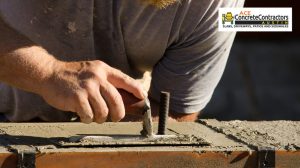 Failing driveways usually fail from below: builder-era slabs were commonly poured thin, without compacted base or steel, directly on clay that was always going to move. The symptoms on top, tilted panels, the garage-line crack, edge breaks, map to specific shortcuts underneath, and replacement fixes what repair can’t reach.
A driveway that’s failing at twenty-five years old isn’t wearing out; it’s finishing a story that started the week it was poured. Across Austin’s 1990s and 2000s subdivisions, production builders poured driveways to a price, and the savings all went to the same invisible places: the base, the steel, the thickness. This guide explains what typically sits under a failing driveway, how the symptoms on top map to the shortcuts below, and what an honest replacement changes. It’s the background reading for our the rebuild standard page, and for the repair-or-replace call our symptom-by-symptom reading guide helps you make panel by panel.
Open up a failing driveway of that vintage and the pattern is well documented across the industry: concrete poured directly on graded dirt with little or no gravel base, no steel or a light mesh that ended up at the bottom of the slab where it does nothing, thickness that tapers below spec at the edges, and control joints spaced for the crew’s convenience rather than the soil. None of these show on day one, which was the point; a driveway only had to look right until the builder handed over the keys and the first-year walkthrough passed. On stable soil, some of those slabs got lucky for decades, and the luck was real. On Central Texas clay, luck was never on the menu, and the failure schedule was set at the pour.
Tilted or stepped panels are the no-base signature: the slab bears directly on clay, the clay moves with moisture, and each panel rides its own patch of ground independently. Wide, wandering cracks that opened early are the no-steel signature, since nothing was there to hold shrinkage cracks tight. The long crack shadowing the garage is usually the missing-joint signature, a story with its own guide. Crumbling edges and broken corners point at tapered thickness meeting wheel loads. And a driveway pumping water at the joints after rain is telling you the subgrade below is saturated, which is the whole failure engine warming up. Reading your driveway against this list is most of a diagnosis, it’s free, and it tells you which conversation to have before anyone quotes anything.
Crack fill, joint work, and section replacement all have honest roles, and our where each repair fits page covers where each fits. But every repair inherits the ground it’s built over, and when the base was never there, each fixed panel is a good deed done on a failing foundation: the soil that tilted the last panel is under the next one too. That’s the ceiling. The practical line most of the industry draws: isolated symptoms on an otherwise sound slab justify repair, while widespread cracking, multiple moved panels, or exposed dirt where edges have broken away justify the conversation about starting over, because past that line, repairs are a subscription.
A replacement done right isn’t the same driveway new; it’s a different structure. The old slab comes out, and the difference goes in where the shortcuts were: subgrade prepared for clay, gravel base compacted in lifts, steel on chairs in the middle of the slab, full thickness carried to thickened edges, and joints cut the same day at spacing the soil dictates, the standard our driveways page describes line by line. That’s also why a replacement quote reads longer than the original builder’s ever did; the lines that were missing are the ones you’re finally buying. The result is a driveway whose cracks live inside its joints and whose panels age together, which is all a driveway on clay can be asked to do, and it’s enough.