
How Long Before You Can Drive on New Concrete, and Why the Wait Wins
New concrete takes foot traffic after a day, passenger cars after about a week, and heavy trucks later still, because strength builds over roughly a month of curing. The first week decides the surface’s whole future, and every shortcut taken then is permanent.
The most expensive day in a new driveway’s life is the day someone couldn’t wait. Concrete doesn’t dry, it cures, gaining strength through a chemical reaction that runs for about a month, and the timeline for feet, cars, and trucks follows that curve. Here’s the honest schedule we give every client, what’s happening under the surface at each stage, and the handful of first-month rules that protect the money you just spent. Where the timeline fits in the whole build, our ownership from day one tells the ownership story from day one onward.

The timeline, stage by stage
Day one: nobody and nothing on it. Day two: foot traffic, gently; the surface can take shoes, not furniture dragged across it. Around one week: passenger cars, driven on, not parked with turned wheels grinding one spot. Later than that for anything heavy, delivery trucks, trailers, RVs, because point loads are what young slabs fear. Full design strength arrives near the month mark. We put your driveway’s specific dates in writing at the pour, since finish, weather, and mix adjust the curve, and Austin heat, covered below, bends it both ways.
What's actually happening in there
Curing is hydration: water and cement binding into the crystal structure that is the slab’s strength, from the surface inward. Early on, the top looks finished while the depth is still assembling itself, which is exactly why the slab can hold a person and not a pickup. Driving early doesn’t usually crack the surface theatrically; it presses invisible weaknesses into a structure still forming, and those cash out later as edge cracks, surface wear, and corner breaks that get blamed on everything except the shortcut.
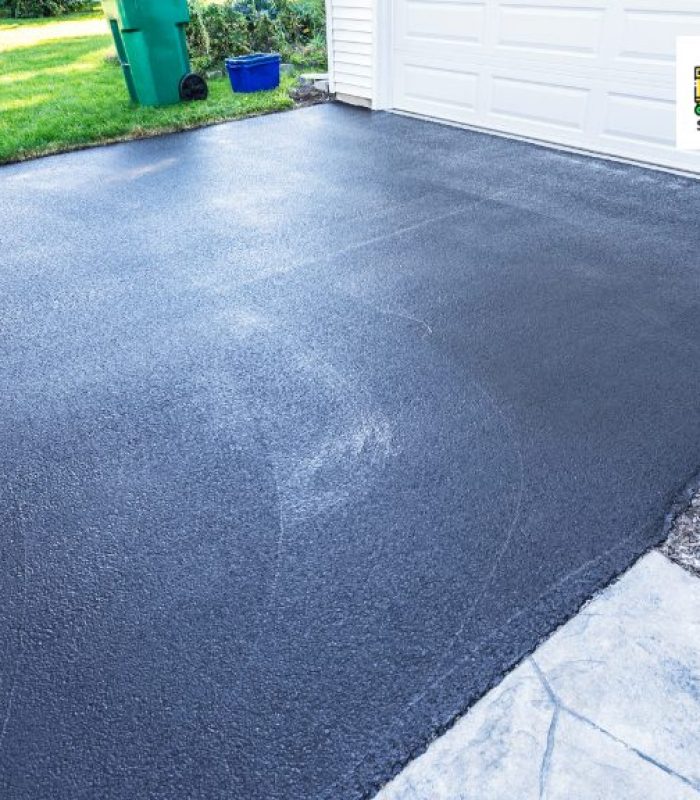
Austin weather and the curing curve
Heat speeds the chemistry and steals the moisture it needs, so summer slabs here are protected against drying too fast, cured wet or covered, and their early-strength gains don’t excuse early loads. Our infrequent cold snaps slow the curve instead, stretching the calendar. Rain after the first day is harmless; the slab doesn’t need protecting from water, it needs water kept in. The practical version: the dates we write down already account for the week’s forecast, and hot-poured slabs deserve their full week even when they look ready by Wednesday.
The first-month rules, and one about the edges
Keep vehicles to the schedule, keep turned-wheel pivoting off the young surface, keep heavy point loads, jacks, trailer tongues, dumpsters, off entirely, and hold sealing until curing finishes, a decision our sealing after curing guide takes up properly. Respect the edges most: slab edges and the apron corners are the last places to gain full strength and the first places early tires find. Give the driveway its quiet month and it spends decades paying you back, which is the trade our the pour standard builds toward on every pour.
Living around the driveway you can't use yet
A week without a driveway takes light planning, and the pours that go wrong socially are the ones where nobody planned it. Park on the street and warn the household, since muscle memory is what puts the first car on a three-day-old slab, and a cone or a strip of tape at the apron beats every family group chat. Schedule deliveries and trash pickup around it where you can; a loaded delivery truck shortcutting across the corner is the classic early casualty, and it happens in the ten seconds nobody was watching. If a genuine emergency demands crossing, plywood spreads a load in a pinch and we’d still rather you called first. The driveway can’t defend itself during its one vulnerable week, so for seven days, you’re the spec, and the crew’s parting gift is a written date for each milestone taped inside the garage, which settles every household debate before it starts.
Questions we hear on this topic
Can I drive on concrete after 3 days?
Not with a car, and three days is where the question usually gets asked. The surface looks ready well before the depth is, and passenger vehicles belong on the slab around the one-week mark. Three impatient days risk decades of surface life, which is the worst trade in concrete ownership.
What happens if you drive on concrete too soon?
Rarely a dramatic crack; usually invisible damage pressed into a structure still forming, surfacing later as edge cracks, corner breaks, and premature wear that look like bad concrete rather than an early car. The slab keeps no secrets, it just reveals them slowly, and early loading is unfixable retroactively.
How long until concrete reaches full strength?
About a month for design strength, with most of the gain front-loaded into the first week, which is why that week carries all the rules. Passenger cars join near the week mark, heavier vehicles later, and the written schedule for your specific pour beats any article’s averages, ours included.
Does hot weather make concrete cure faster?
It speeds the chemistry while stealing the water the chemistry needs, so hot-weather slabs are kept moist or covered to cure properly. The early strength heat produces doesn’t shorten the vehicle timeline, and a summer slab rushed because it looked ready is the classic Austin version of this mistake.
Can it rain on new concrete?
After the first day, rain is harmless and mildly helpful, since curing concrete wants moisture kept in, not kept off. Rain during the pour and finishing is the actual enemy, which is why pour dates watch the radar. A cured-in rainstorm hurts nothing but the crew’s lunch plans.
How do I keep people off new concrete?
Physically, not verbally: cones or tape at the apron for the first week, a note to delivery services, and the milestone dates posted where the household sees them. Most early-load damage comes from habit and visitors, not decisions, so the barrier that works is the one standing there at midnight.