
How Concrete Staining Works, and When It's Not the Answer
Concrete staining is a decorative treatment that colors sound concrete; it isn’t a repair. Stains highlight rather than hide cracks, patches, and surface damage, so the slab has to be right first. This guide explains what staining involves and which problems need fixing before, or instead of, color.
We should say up front what this guide is and isn’t: we’re a structural flatwork crew, we don’t offer decorative staining, and this isn’t a pitch for it. It exists because staining questions arrive on repair calls weekly, usually as a hope, that color might cover the cracks, the patches, the tired surface, and the honest answer deserves a page. Staining is real and can look terrific; it’s also the least forgiving finish decision a flawed slab can make. Here’s how it works, what it demands from the concrete underneath, and which problems, ours to fix, come first or instead.

What staining actually is
Concrete stains are penetrating color treatments, and they come in broadly two families: acid stains that react chemically with the concrete for mottled, variegated depth, and water-based stains that deposit color more predictably in a wider palette. Both soak into the surface rather than film over it like paint, which is their virtue, since there’s nothing to peel, and their catch: they’re translucent, so everything in the slab shows through the color, history included. Every trowel mark, every patch, every crack, every cleaned-but-ghosted stain becomes part of the finished look, sometimes charmingly, usually not by accident.
What the slab has to be before color makes sense
Sound, stable, clean, and consistent, which is a shorter list to say than to earn. Cracks that are moving will keep moving in color, just more visibly, and our crack guide, which cracks move, sorts the moving ones from the settled ones before any finish conversation starts. Patches and filled sections stain differently than the surrounding pour, permanently, so a patched slab is choosing a patchwork finish. Spalling and etched cleaning damage read louder under stain, not quieter, and there’s no color dark enough to change that. Sealed concrete blocks penetration entirely and has to be stripped first, and previous coatings or heavy contamination do the same job unevenly, which is worse than doing it completely. This checklist is why staining conversations so often turn into repair conversations first: the slab has its own agenda before the color gets a vote.
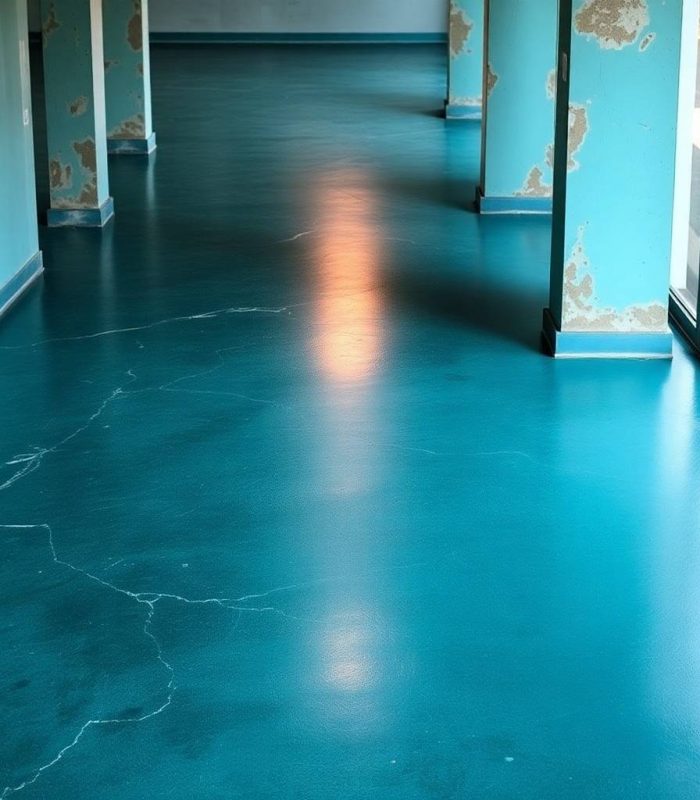
The problems staining is asked to solve, and can't
Cracked patio: stain highlights cracks rather than hiding them; the sequence is stabilize and repair through our repair-first sequence, then decide on finishes with clear eyes, and know that the repairs themselves will show through any translucent color, because translucent means translucent. Sunken or heaving sections: a leveling problem in any color; movement gets fixed first or the finish rides it. Tired, damaged surface: resurfacing with a bonded overlay actually replaces the surface, and fresh overlay takes finishes evenly, making repair-then-resurface the honest route to a slab worth coloring. What we won’t do is stain over problems and invoice for optimism.
If the slab is sound and you want color
Then the good news is options, and the honest news is lanes, ours and everyone else’s. Decorative staining is a specialty trade with its own craft, and it’s not ours; hire it as seriously as you’d hire any finish work, and expect a moisture and condition check before anyone opens a can, the same clearance logic our coating clearance logic guide explains for coatings. For new pours, integral color, pigment mixed through the whole batch, is the other route decorative contractors use, and it isn’t one we offer either. Our contribution either way is the part under the color: a slab that’s sound, level, and honest enough to be worth decorating. That division of labor isn’t modesty; it’s how the good outcomes happen, because the decorative trades do their best work on concrete that doesn’t need excuses, and we’d rather hand them that than watch color get blamed for a slab’s history.
Questions we hear on this topic
Does staining concrete hide cracks and imperfections?
No, it does closer to the opposite: stains are translucent, so cracks, patches, and surface damage show through the color, often more visibly than before. Sound slabs stain beautifully; flawed slabs stain into documentation of their flaws. Repair and resurfacing come first, and the repairs themselves will read through translucent color.
Can you stain concrete that has been patched or repaired?
You can, and the patches will announce themselves: repair material and aged original concrete take stain differently, permanently. Where patched concrete wants uniform color, the honest sequence is repair, then a bonded resurfacing overlay, then finish, since fresh overlay accepts color evenly. Skipping the middle step chooses the patchwork look.
Is staining or painting concrete better?
Different bets: stain penetrates and can’t peel but shows everything beneath it; paint and coatings cover uniformly but live as a film that can lift, especially over moisture. Both demand a sound, clean, moisture-cleared slab. The condition of the concrete, more than the product, usually decides which bet is safe.
Why did concrete stain come out blotchy?
Because the slab was telling its history: old sealer patches, cleaned spills, trowel-burn density differences, and repairs all absorb stain unevenly, and acid stains amplify the variation by design. Blotchy is what translucent color over an inconsistent surface produces. The prevention was surface prep and honest expectations, in that order.
Do you need to seal concrete after staining?
Stained surfaces are typically sealed to protect the color and add sheen, which enrolls the slab in a resealing schedule thereafter. It’s part of the real cost of the decorative route, worth pricing alongside the color itself. That maintenance trade is finish-dependent, the same calculus any decorative concrete surface signs up for.
How long does concrete stain last?
The color itself is durable because it’s in the surface, not on it; what ages is the protective sealer over it, which wants renewal on a schedule to keep the depth and sheen. Skip the maintenance and the finish dulls and wears unevenly. The honest lifespan quote is therefore a maintenance quote.