How to Seal a Concrete Driveway Without Regretting It
- Ace Concrete Contractors Austin
- Concrete Contractor Tips
Ace Concrete Contractors Austin

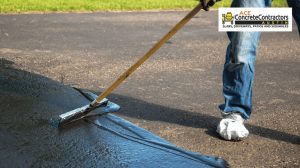 Sealing a concrete driveway is optional protection done in four steps: decide by finish and exposure, clean the slab completely, choose penetrating or film sealer honestly, and apply thin in the right weather. The prep is most of the result, and the wrong product is the usual regret.
Driveway sealing’s sold as a schedule and it’s really a decision, and the decision comes before any product does. A broom-finish driveway doesn’t need sealer to survive Austin; it needs it only if you want easier stain cleanup and a slightly richer surface. Colored and exposed-aggregate driveways have more at stake, since sealer is what protects the look. This guide covers the decision, then the job itself, because the sealing that gets regretted is almost always a prep or product mistake, not a concrete one. Why concrete asks so little in the first place is covered in our why concrete asks little.
Seal when: the finish is colored, stamped, or exposed aggregate; the driveway collects oil drips, tree tannins, or rust from irrigation; or you simply want the maintained look. Skip or defer when: it’s plain broom finish in ordinary use, or the slab is new and still curing, since sealer on uncured concrete traps moisture and clouds. And never seal to fix a problem, because sealer over cracks, spalling, or settling just gift-wraps the issue; those belong to our fix before sealing first.
Every sealing failure we’re shown started before the sealer: the surface wasn’t fully clean, old sealer wasn’t stripped, or the concrete’s damp underneath. The sequence is degrease the oil spots, clean the whole slab, strip any failing previous film, rinse, and then wait for genuinely dry concrete, which after a wash takes longer than it looks; a slab that’s dry on top can still be damp an inch down, and that inch is where the blush comes from. [CONFIRM process observation: e.g., the prep step homeowners most often skip and how it shows up in the finish.] A driveway with stains that cleaning won’t lift is telling you sealing season is also resurfacing-conversation season.
Penetrating sealers soak in, protect against water and salts, barely change the look, don’t peel, and fail gracefully by just wearing out. Film-forming sealers sit on top, deepen color, add sheen, and take the wear, which means they show tire marks, can get slick when wet, and eventually need stripping or recoating. For plain gray driveways, penetrating is the low-regret answer. Film sealers belong on decorative finishes where the look is the point, with grit added anywhere the driveway doubles as a walkway.
Apply thin; puddles and heavy coats are what bubble and peel. Work in the product’s temperature window, which in Austin means spring and fall mornings, never a summer afternoon when the slab itself is hot. Keep cars off until fully cured, walk-testing first. Then calendar honestly: penetrating sealers renew every several years, films sooner in full sun, and a lapsed film should be stripped rather than buried under a fresh coat. Sealed or not, the driveway’s real lifespan was set at the pour, and our replacement standard covers that standard when yours reaches replacement age.
Driveways collect what cars drop, and oil is the stain that makes people reach for sealer, so here’s the honest sequence. Existing stains come out first or not at all, degreaser and hot water for fresh drips, poultice products for the soaked-in ones, and whatever survives that treatment is now part of the driveway’s biography. Sealer applied over a stain doesn’t hide it; it laminates it. What sealer genuinely buys is next time: on a sealed surface, the drip sits up and wipes away instead of soaking in, which is the whole practical case for sealing a plain gray driveway that hosts an older car. If that’s your situation, it’s a fine reason to seal, And if it isn’t, the stain argument shouldn’t be what sells you; a driveway that’s never dripped on doesn’t develop the problem sealer solves.