
Concrete Contractors in Barton Hills, Austin
Ace Concrete Contractors Austin replaces driveways, pours patios, and rebuilds carport slabs and walks across Barton Hills, the hilly 78704 neighborhood along the Barton Creek greenbelt. Most lots here slope and sit on rock, so every job is planned around grade, limestone under the yard, and where the water runs.
Barton Hills is mostly 1950s to 1970s ranch homes on rolling, rocky lots, many with their original driveways, carports, and back patios. That concrete is now fifty or more years old, and the slope that makes the neighborhood pretty is also what wears it out.


Request Free Quote
Hills, rock, and the greenbelt
Barton Hills climbs west from Zilker toward the greenbelt, and many backyards drop toward the creek. Limestone sits close to the surface in much of the neighborhood, sometimes just under the grass, with pockets of clay in the low spots. That mix changes the dig, the base, and how water moves across the lot.
Rock is solid ground for concrete, but it’s slow to dig and it sends water sideways instead of soaking it in. Our guide to limestone versus clay explains how each one affects a pour, and our south-of-the-river coverage covers the wider area.
Driveways on a slope
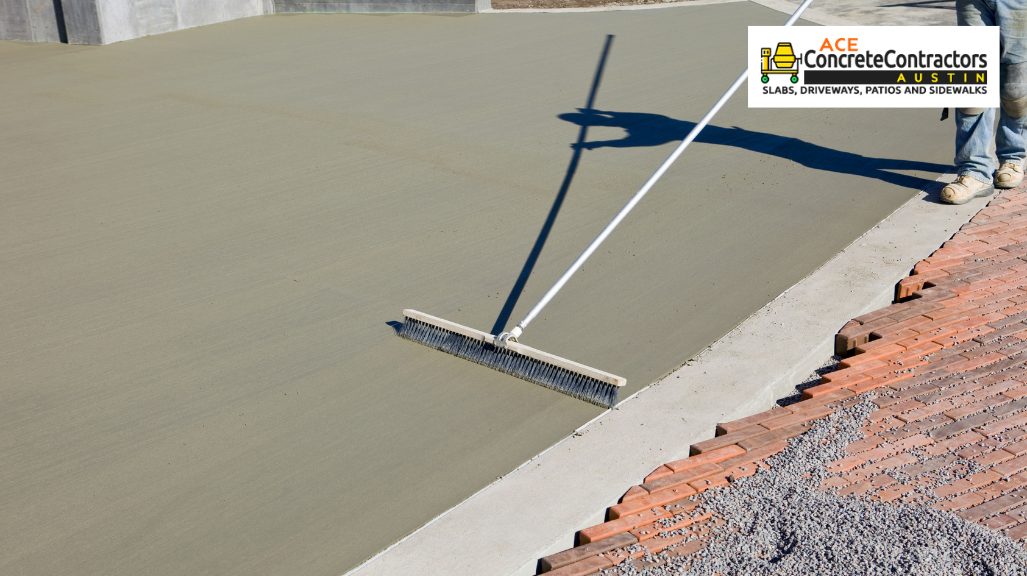
Plenty of Barton Hills driveways climb from the street or drop to a carport. After decades of rain running down them, they crack at the bottom, break at the street, or get undercut along the edges. A replacement on a slope gets a deeper broom texture, braced forms, and a pitch that carries water to the sides instead of into the garage or carport.
Where rock sits high, it’s scraped or broken out so the new driveway has an even base and lands at the right height. Our sloped driveway rebuilds page covers tear-out, the street apron, and widening.
Carport slabs and 1960s concrete
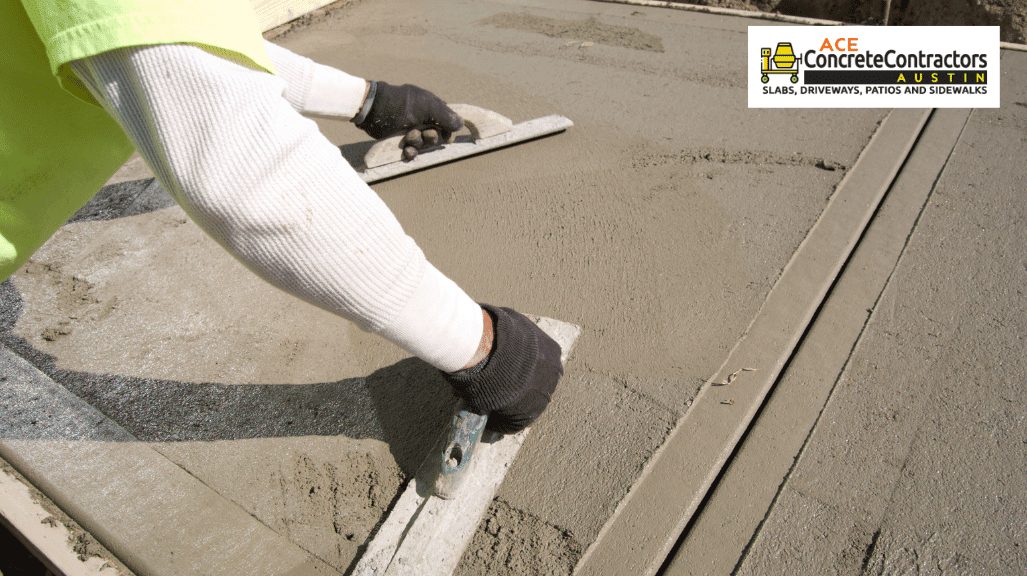
Many Barton Hills ranch homes have a carport or a slab beside the house that’s as old as the house itself. These slabs crack, tip toward the wall, or drop at the open edge. Some can be repaired by replacing the worst sections; others are better broken out and repoured with a proper base and steel.
When a carport is being closed in or rebuilt, the slab under it often needs replacing anyway. Our carport slab repair page explains when sections can be saved and when the whole slab should go.
Patios on rocky, sloped backyards
A flat patio on a lot that falls toward the greenbelt starts as a grading job. It might step down in levels, sit on a built-up base at the low side, or end at a short curb that holds the grade. Rock near the surface can help here, giving the patio a firm footing once it’s leveled.
Water decides the layout. Rain moves fast on a slope, so the patio is pitched to send it into the yard, away from the house and away from the neighbor’s lot below. Shade from big oaks keeps these patios cooler in summer, but it also means leaves and slower drying, so the pitch stays steady. Our greenbelt-side patios page walks through layout, joints, and the broom finish.
Front walks and steps on a grade
On a sloped lot, the walk from the driveway to the front door often includes a few steps, and those steps take the brunt of the runoff. Over time, treads crack, edges break, and the walk below them washes out. A rebuild sets the steps on a compacted base with even rises and a level landing, and the walk is pitched so water runs off to the side instead of down the steps. Every surface gets a broom finish for grip in the rain.
Watershed and paved area
Lots near Barton Creek can fall under tighter limits on paved area, and older homes with long driveways and carports may already be close to them. We check what’s already on the lot and the rules for your address before designing anything new. Our guide to paved area near Barton Creek explains how the limits work. When a permit is needed, we coordinate it through a permitting partner.
How a Barton Hills job runs
Send your address and a photo, and we’ll reply the same business day. The measuring visit looks at slope, rock, drainage, existing paved area, trees, and access for the truck on hilly streets. After that, you’ll get a written, itemized scope with tear-out, rock work, base, steel, joints, finish, and cleanup, each on its own line.
Ace is veteran-owned, our own crew does the pouring, and the person who measured your job is on site when it’s poured. Nearby, we also work in Zilker’s cottage blocks just east and across Congress in Travis Heights’ hillside streets.
Concrete questions from Barton Hills homeowners
Is rock under my yard good or bad for new concrete?
Mostly good. Limestone doesn’t swell and shrink the way clay does, so concrete on rock tends to stay put. It’s slower to dig, though, and rock that sits too high or at an angle has to be broken out so the slab lands at the right height. Any rock work is listed as its own line in the scope.
Can an original 1960s carport slab be replaced?
Yes. The old slab is broken out, the ground under it is checked, and a new slab goes in on a compacted base with steel and joints. If the carport posts sit on the slab, they’re supported during the work. We’ll look at whether sections can be saved first, and explain the choice in writing before any work is booked.
How do you stop water from running down the driveway into the garage?
By pitching the driveway so water leaves it before reaching the garage. That can mean a crown that sheds water to both sides, a slight cross-slope, or a low edge that steers runoff into the yard. The grade near the garage door is set so rain flows away from the opening.
Can you reach a backyard that backs onto the greenbelt?
Usually, yes. Most backyards can be reached through a side yard or gate. When a truck can’t get close, concrete is pumped in or moved by buggy. We don’t work on the greenbelt side of your property line, and access is checked at the measuring visit so it’s planned before pour day.
Do you remove the old concrete and haul it away?
Yes. Tear-out and haul-off are part of the job and listed as their own lines in the scope. Old concrete is broken up, loaded, and taken away, and the site is cleaned before the new pour. If there’s rock to remove as well, that’s listed separately so you can see the full picture.
What does a measuring visit check on a hillside lot?
Slope, rock, and water come first: how steep the grade is, how close rock sits to the surface, and where rain runs. We also look at what’s already paved, trees and roots, the condition of the old concrete, and how a truck reaches the work area. All of it shapes the scope.
Request a Free Estimate and send a few photos of the area. We’ll reply the same business day.